
News Archive
Keep up-to-date on all the latest Anthropology Department News below, or view our news archive to check out our past news and events.
Share an Announcement
Do you have something you'd like to share with the department? Let us know by submitting our News Submission Form!
-
Fall 2026
-
Dr. Kate Spradley Named a 2026 MacArthur Fellow
Dr. Kate Spradley has been named a 2026 MacArthur Fellow for her work identifying and repatriating the remains of migrants who have died along the Texas-Mexico border.
The prestigious fellowship, often referred to as a "genius grant" is awarded to 20-30 exceptionally talented and creative individuals per year. Each fellowship comes with an $800,000 “no strings attached” stipend to be used by the awardee as they see fit. According to the MacArthur Foundation, the fellowship "is an investment in a person's originality, insight, and potential."https://www.macfound.org/fellows/class-of-2026/kate-spradley
Congratulations to Dr. Spradley! -
Veterans Curation Program Hiring
CAS is accepting applications for the 2026-2027 Veterans Curation Program session at the Center for Archaeological Studies satelite lab location. Apply today at https://lnkd.in/gKEE2ghY
-
Brown Bag Talk
Join the upcoming Brown Bag Talk on September 22 led by Elizabeth Moore discussing a bibliometric analysis on publishing trends in Peruvian Archaeology.
If you'd like to present your own research, reach out to maa260@txstate.edu or erv46@txstate.edu -
PhD Student Mandy Jordan Awarded Texas Research Leadership Scholarship
Mandy Jordan, a first-year doctoral student in applied anthropology at Texas State University, has been selected for the Texas Leadership Research Scholars Program, a prestigious statewide initiative awarded by the Texas Higher Education Coordinating Board that supports top students at public research universities in Texas.
-
Magazine Article Features Archaeological Research by TXST Students and Faculty
Archeological research carried out by TXST at the Mockingbird Gap Clovis site in New Mexico is the subject of a feature article in the Fall 2026 edition of American Archaeology magazine, a quarterly publication of the Archaeological Conservancy. Mockingbird Gap is a sprawling archaeological site associated with the 13,000 year old Clovis technocomplex, located adjacent to ancient riverbed in what is now a dry desert landscape. The article highlights research by graduate students Gwen Olivier and Matt Mele, who are part of an interdisciplinary team led by Dr. David Kilby along with colleagues from other universities. The Archaeological Conservancy is a non-profit organization that acquires and preserves archaeological sites around the United States.
-
First Place Poster Winner at the Brazilian Forensic Anthropology National Conference
Bianca Schueng Zancanela, a third-year PhD student, was awarded first place for her poster presentation at the Brazilian Forensic Anthropology National Conference, Aracaju, Brazil. Her winning presentation was titled, "Investigating Cranial Variation at the CEAF-UFPE Collection in Brazil Using Geometric Morphometrics and a Quantitative Genetics Approach."
The award-winning work stems from a Spring 2026 pilot study designed to test the reliability of specific statistical methods. Zancanela’s research yielded significant results, successfully detecting secular cranial variation within the CEAF sample.
The project was conducted under the guidance of her advisor, Dr. Nicholas Herrmann, alongside committee members Dr. Elaine Chu and Dr. Melina Calmon. Zancanela also partnered with colleague and Texas State doctoral graduate Elisabeth Cuerrier-Richer to complete the study. -
Dr. Carolyn Boyd Featured in the Guardian
Dr. Carolyn Boyd was featured in the Guardian detailing the impact of the proposed border wall on ancient rock art in Western Texas.
-
Dr. Kilby Publishes Volume on the Earliest Archaeology of the American Southwest
Dr. David Kilby, along with the late Dr. Bruce Huckell (University of New Mexico), has published the first comprehensive overview of the early archaeology of the North American Southwest. The Southwest looms large in American archaeology, well known for the agricultural societies that dominated its arid landscape in later times. However, the traces of its earliest occupants, Native American ancestors who shared the ancient landscape with mammoth and giant bison toward the end of the last Ice Age, remain more obscure. Nevertheless, discoveries and methodological advances in the Southwest have strongly influenced the direction of Paleoindian research across the continent.
"The Paleoindian Southwest" is a collection of twelve chapters that explore the history of research, classic and newly discovered archaeological sites, as well as broader overviews of patterns of human behavior across varied regions of both the United States and Mexico, authored by experts in the field. The subjects of the book's chapters range from classic Clovis mammoth kills, to landscape-scale surveys, to the newly discovered pre-Clovis human trackways at White Sands National Park. Kilby serves as an editor of the volume as well as an author or co-author of four of the book's chapters. The volume is published by the University of Utah Press. -
Wescott and Cunningham attend the International Forum for Police Sciences
FACTS Director Dr. Daniel Wescott and FACTS faculty member Dr. Deborah Cunningham attended the Third International Forum on Police Sciences (III FICP) in Curitiba, Paraná, Brazil, organized by Instituto Arrecife (@institutoarrecife, @restec_gesp). This year's conference focused on forensic sciences and evidence-based approaches to public safety, bringing together law enforcement professionals, scientific researchers, students, public officials, institutional leaders, and private-sector innovators in a unique setting designed to bridge practice, science, technology, and innovation.
Dr. Wescott delivered the keynote address. "Improving Medicolegal Death Investigations through Research and Training." and Drs. Wescott and Cunningham participated in a panel on forensic science and public safety, where they discussed the importance of accurate postmortem interval estimation and the role of research in strengthening death investigation systems
Drs. Wescott and Cunningham made numerous connections at III FICP that will lead to long and productive relationships with UNESPAR and other partners in Paraná and Brazil, strengthening future collaborations in forensic anthropology, research, training, and evidence-based public safety.
-
-
Spring / Summer 2026
-
Dr. Ahlman Awarded $500,000 from National Preservation Institute
Dr. Todd Ahlman (Center for Archaeological Studies) has been awarded a total of $500,000 by the National Preservation Institute for the project "FLW Phase II NRHP Evaluation for NRHP Evaluation for Maneuver Area Expansion Fieldwork." Dr. Ahlman's team will partner with Missouri State University to investigate fifteen sites at Fort Leonard Wood, Missouri.
-
Drs. Siegert and Wescott Invited Presenters at the Border Prosecution Unit
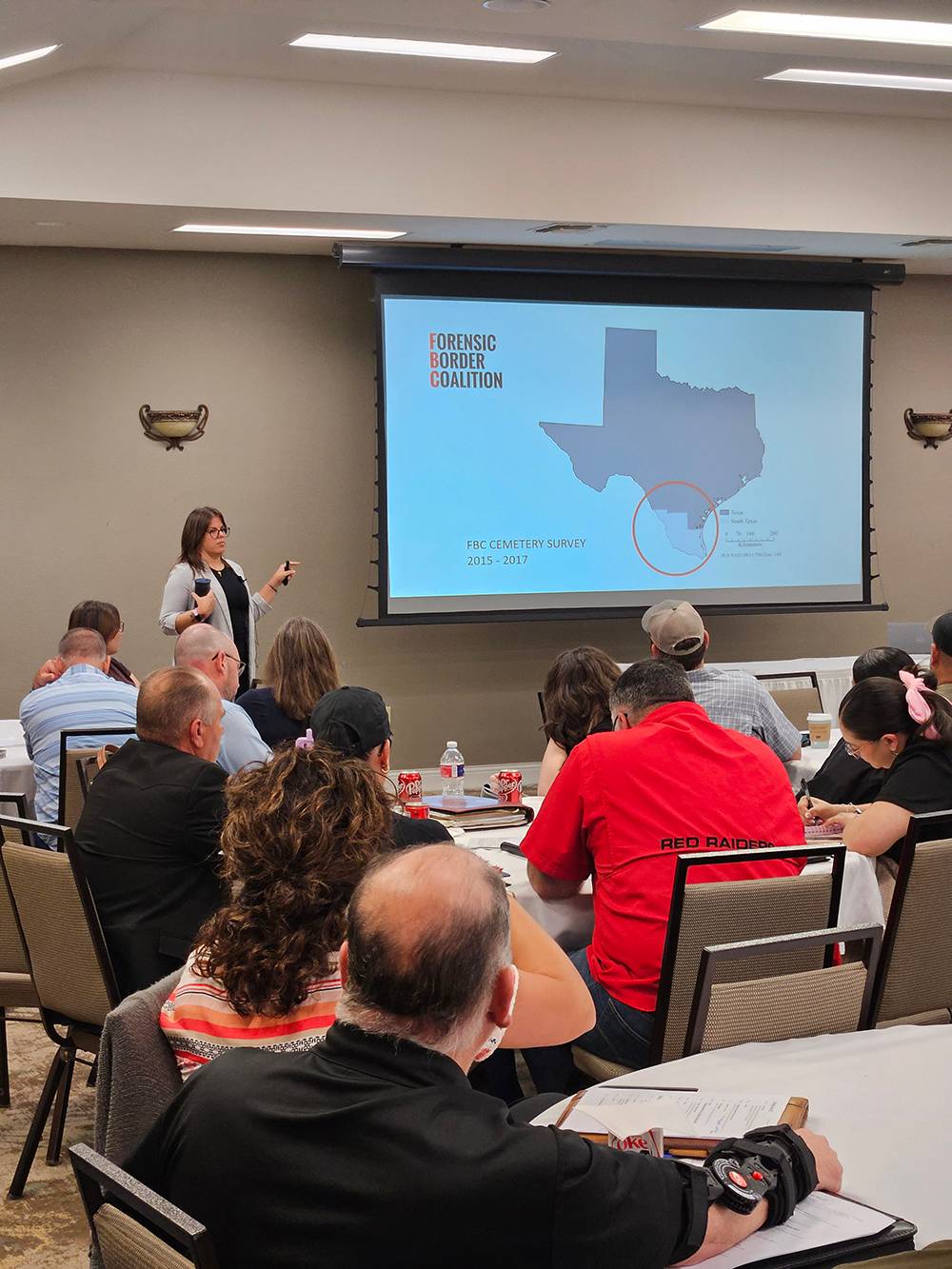
Drs. Courtney Siegert and Daniel Wescott were invited presenters at the 2026 Annual Conference of the Border Prosecution Unit. Dr. Siegert discussed the important role of OpID in the identification process and Dr. Wescott provided an overview of FACTS. The conference was a great success!
-
Two PhD Students Awarded P.E.O International Peace Scholarship
Two PhD students are among twenty-seven Texas State graduate students who have received awards from the P.E.O. International Peace Scholarship (IPS) Fund for the 2026-27 academic year. Tania Akhter (advised by Dr. Jill Pruetz) is a first time award recipient and Bianca Schueng Zancanela (advised by Dr. Nicholas Hermann) was awarded a renewal scholarship.
The P.E.O. IPS provides up to $12,500 per award year to international female graduate students at all levels and in all disciplines pursuing graduate studies in the United States. Previous IPS recipients may apply for a one-time renewal award and therefore receive up to $25,000 to support their graduate degrees.
-
Dr. Hernandez-Swift Awarded Undergraduate Research, Learning and Community Engagement Program Grant
Dr. Karla Hernandez-Swift was awarded an Undergraduate Research, Learning and Community Engagement Program Grant By the TXST College of Liberal Arts for her project titled: “San Pedro Cemetery Digital Humanities Project: Oral History, Community Storytelling, and ArcGIS Story Map Development.” She will work collaboratively with Dr. Ana Juarez and Dr. Aimee Villarreal to support undergraduate students' research and learning through community engagement.
-
John Michael Kilby Research Fellowship Award Winners
Congratulations to three winners of the John Michael Kilby Research Fellowship for 2026-2027! Fellowships were awarded to:
- Ashley Medlin; PhD Award: $2100 - Evaluating Relationships in Early Paleoindian Technology in the Americas
- Morgan McGuire; MA Award: $1300 - A Biomedical Study of Femora from the Ancient Eastern Mediterranean
- Emily Ward; MA Award: $1300 - Methodological Approaches to Forensic Dentition
-
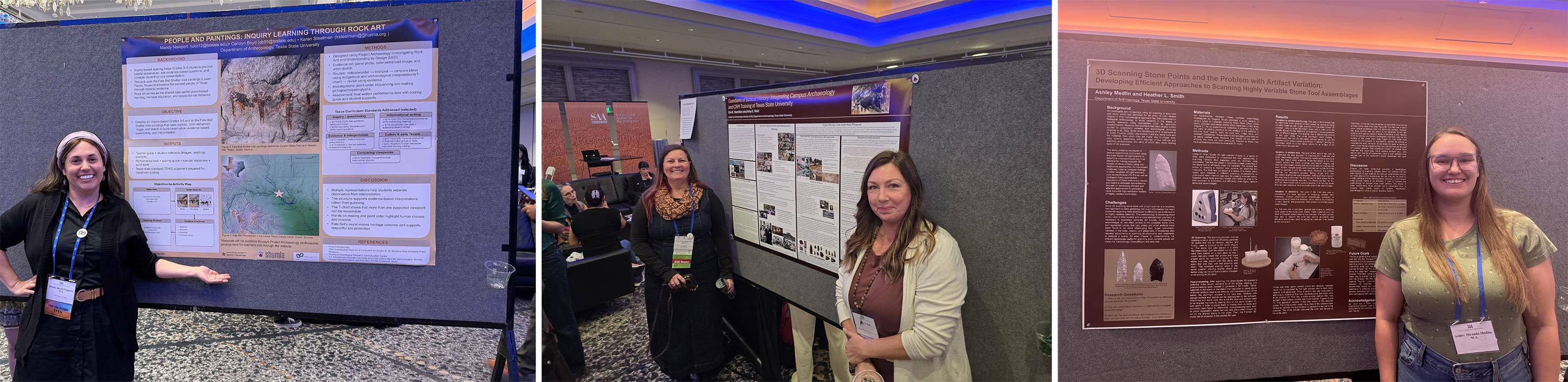
15 Anthropology Graduate Students Present Research at the Annual meeting of the Society for American Archaeology in San Francisco
Fifteen Texas Sate archaeology graduate students presented original research at the Annual meeting of the Society for American Archaeology in San Francisco this weekend! Way to go and represent TXST Anthropology!!!
-
Anthropology Awards Luncheon
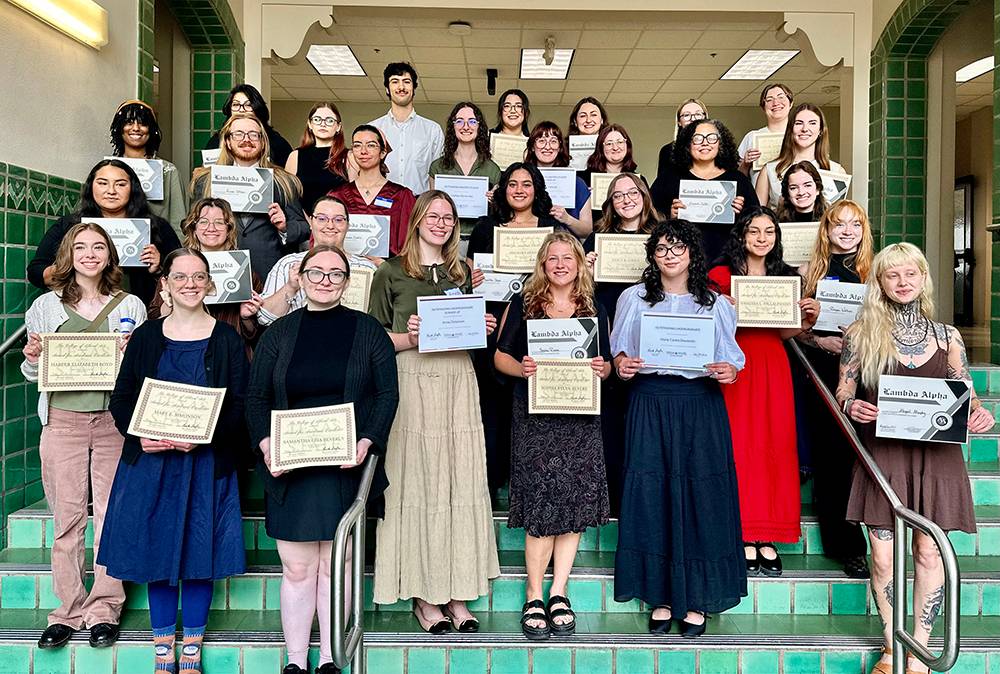
Anthropology Department held an awards ceremony on Friday, April 24th, 2026 to recognize our outstanding students. Those honored that day were students who received an Academic Excellence Award, Outstanding Undergraduate Student, Outstanding Master's Student and Outstanding Doctoral Student. We also recognized those students inducted into the Lambda Alpha Honor Society and into Phi Beta Kappa. Congratulations to all!!!
-
PhD Student Myriah Allen awarded a 2026-2027 P.E.O. Scholar Award
Myriah Allen is a doctoral candidate in applied anthropology. She earned a Master of Arts in Anthropology with specifics in forensics from the University of Montana and two Bachelor of Arts degrees in Criminology and Criminal Justice and Anthropology from the University of Texas at Arlington. Her dissertation titled “An Examination of the Presence of Livestock in the Southern Plain: A Tale of Two Communities,” examines the introduction of Spanish stock animals into the Indigenous societies of the Southern Plains during the 16th and 17th centuries. In addition to examining the early effects of Spanish colonialism on the Plains. Her dissertation committee is chaired by Britt Bousman, Ph.D. professor in the Department of Anthropology. Allen was nominated by P.E.O. Chapter KA of San Marcos, Texas.
-
Elin Linder, Postdoctoral Researcher in the InnoAnth Lab Launches Podcast—Menstrual Stories: Lived Experiences of Cycles, Bodies, and Care
Elin Linder, a visiting scholar and post doctoral researcher in the Innovative Anthropologies Lab has launched a podcast—"Menstrual Stories: Lived Experiences of Cycles, Bodies, and Care." This (live) podcast brings her postdoctoral research interests into a public space for dialogue and reflection. Through conversation, storytelling, and critical engagement, each episode explores menstrual health, care practices, embodiment, and the socio-cultural stories that shape how we understand menstruation. At the center are lived experiences. The podcast draws on personal reflections and the stories of menstruating people, creating space for voices, perspectives, and ways of knowing that are often left unspoken. Check out the first episode on Spotify!
-
Anthropology Graduate Alumna Awarded Prestigious Fellowship
Daniela Martinez Herrera, a departmental alumna who earned her MA in anthropology at Texas State (Advisors - Dr. Elaine Chu and Kate Spradley) has been awarded a University Fellows Award at the University of Arizona, where she will pursue a PhD. This is a prestigious fellowship offered only to the University of Arizona's highest-ranked incoming graduate students.
-
Anthropology Movie Night | Arrival
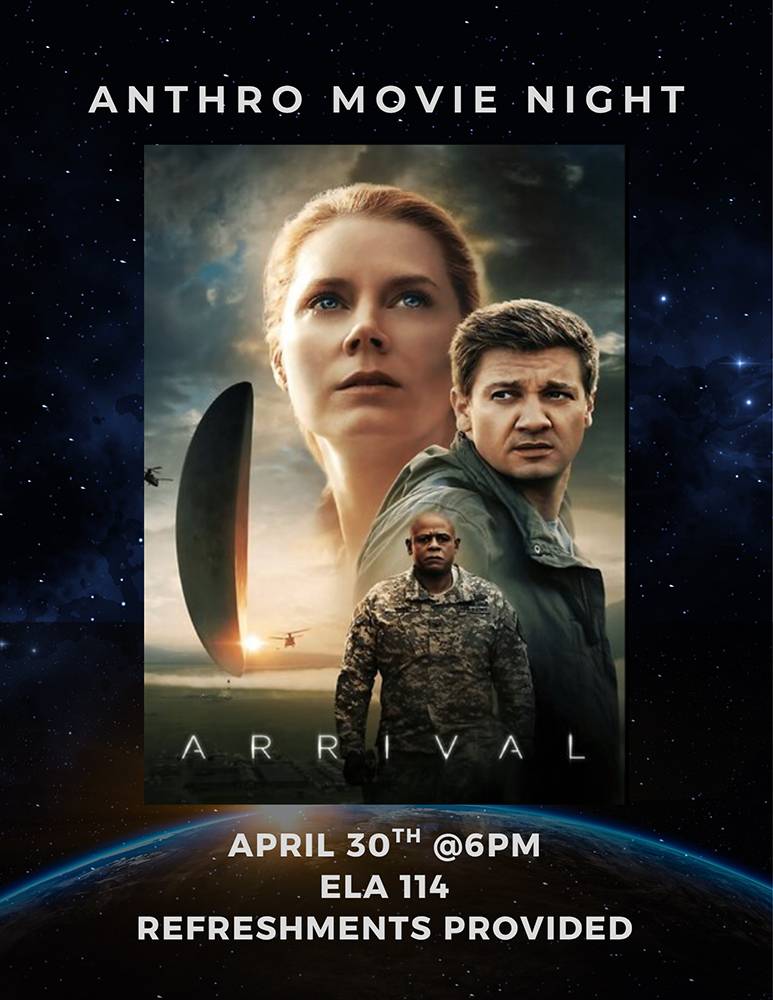
Join the Department of Anthropology for a movie night!
Date | Thursday, April 30, 2026
Time | 6:00 pm
Location | ELA 114The department will be screening Sinners. Refreshments provided and all are welcome.
-
Ph.D. Student Awarded the Meso-American Research Sholarship
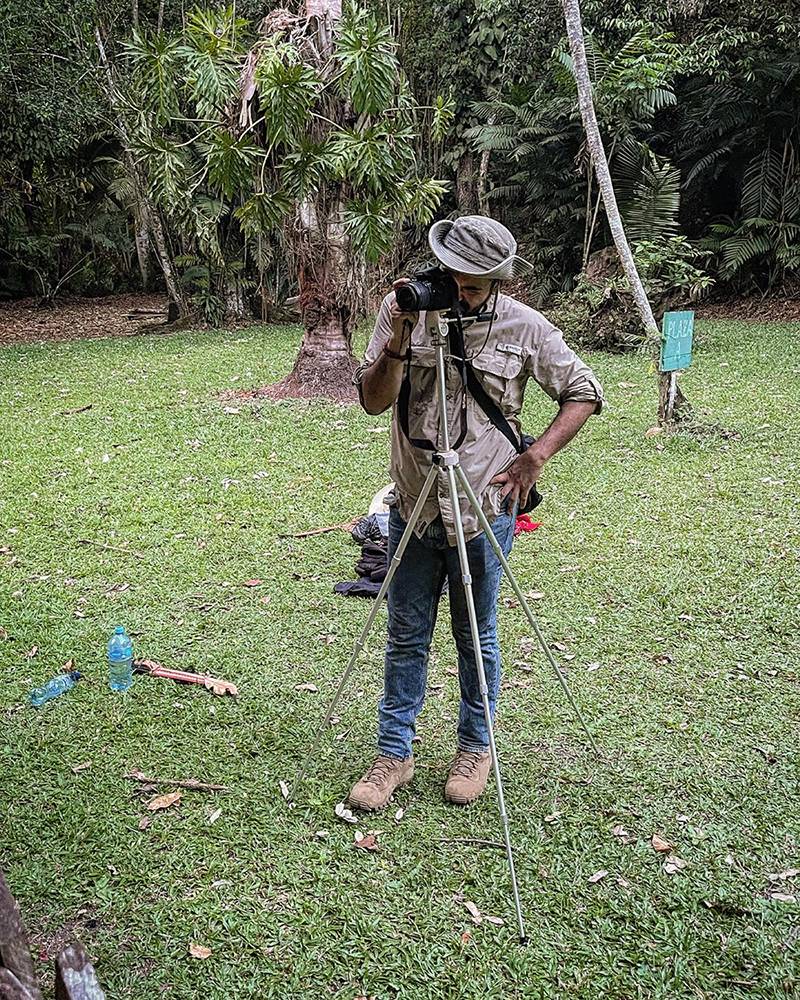
Jacob David Lozano, a fourth-year Ph.D. candidate in Applied Anthropology at Texas State University, has been awarded the Meso-American Research Grant in the amount of $5,000. The award supports his continued work in Mesoamerican archaeology, including upcoming field and outreach activities in Belize.
The funding will assist with archaeological research, travel, lodging, and participation in the Belize Community Archaeology (BCA) program, a community-based initiative focused on expanding access to archaeological education. Through BCA, Lozano contributes to hands-on training in ceramic analysis, excavation techniques, iconography, and laboratory and statistical methods for students in Belize, supporting both cultural heritage engagement and professional development.
This award reflects Lozano’s continued dedication to research, mentorship, and collaborative fieldwork, while underscoring the meaningful role archaeology can play in bringing people into closer connection with the past and the communities that preserve it.
-
Forensic Anthropology Society Meeting
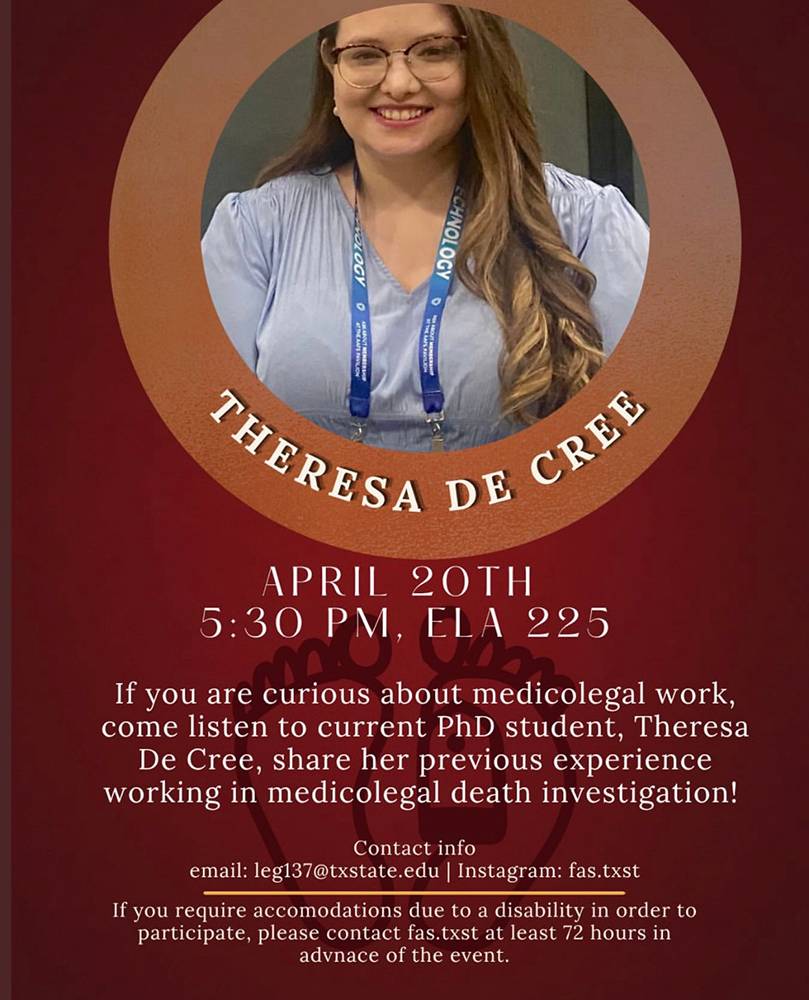
Join The Forensic Anthropology Society for a discussion on medicolegal work! Learn about working within the medicolegal field from current Ph.D. student, Theresa De Cree, as she shares her experiences working in medicolegal death investigations.
Date/Time | Monday, April 20, 2026 | 5:30 pm
Location | ELA 225 -
Dr. Spradley Interviewed for The Current Podcast
Dr. Kate Spradley was recently interviewed on The Importance of Operation Identification by University President, Kelly Damphouse on “The Current Podcast.” They discuss why she went into the anthropology field, what happens at the Forensic Anthropology Center (body farm), and the importance of creating OpID to facilitate the identification and repatriation of unidentified human remains along the South Texas border.
You can find the episode on The Current website, YouTube or wherever you get your podcasts.
-
CAS Featured in The University Star
Dr. Todd Ahlman, and the rest of CAS, were featured in a piece by the University Star regarding a grant they received to conduct research in France during the summer of 2025 and 2026. The grant, awarded by The Department of Defense POW/MIA Accounting Agency (DPAA) is meant to “provide the fullest possible accounting for our missing personnel to their families and the nation,” for four missing crewmen from a crash during WWII.
You can learn more about the project in the University Star.
-
Archaeology Club Meeting
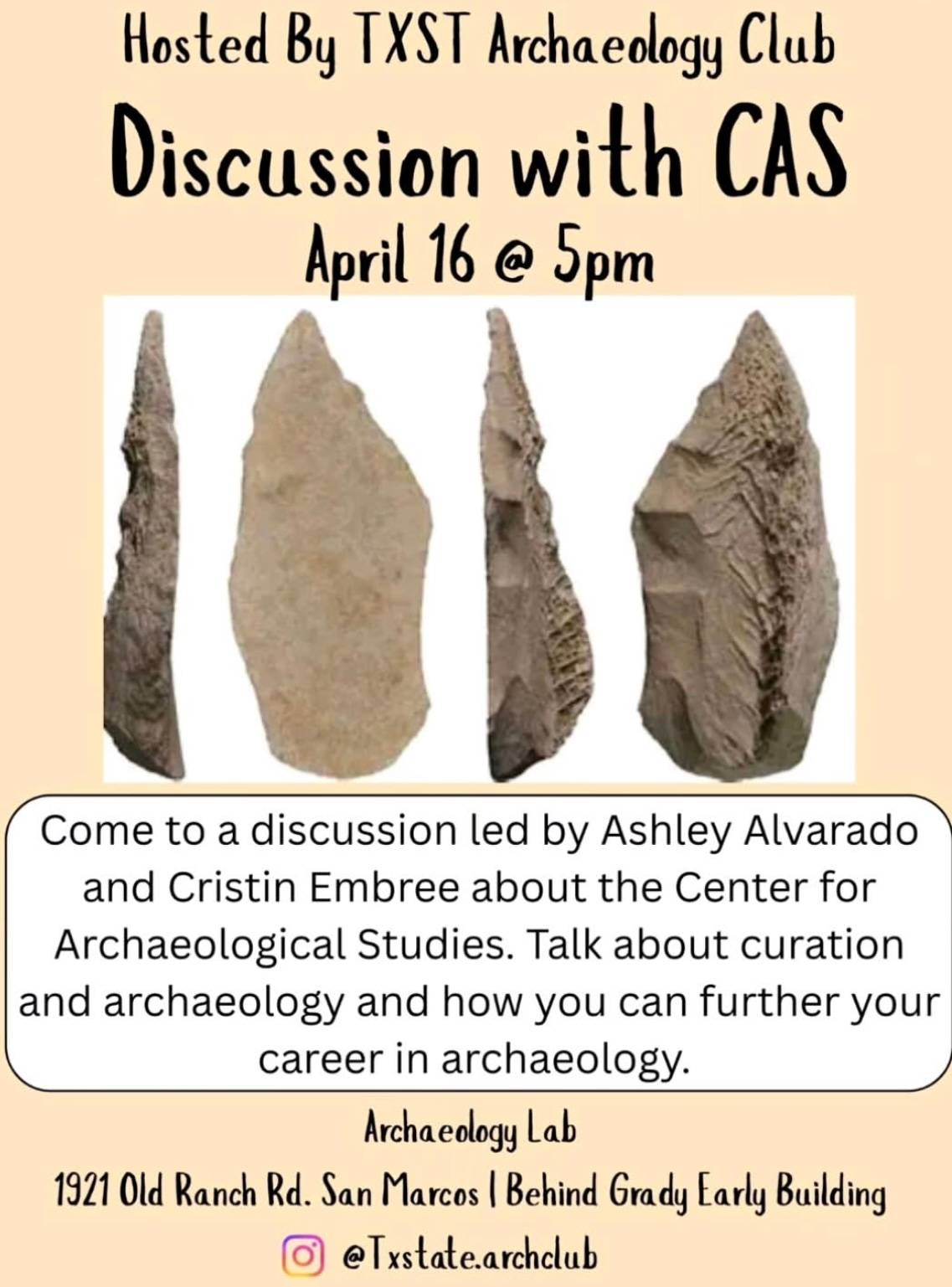
Join the Archaeology Club tomorrow, April 16th @5pm, for their last meeting of the semester! Come hear Ashley Alvarado and Cristin Embree talk about the Center for Archaeological Studies (CAS) and learn how you can further your career in archaeology. Meeting located at 1921 Old Ranch Rd.
Date | Thursday, April 16, 2026
Time | 5:00 pm
Location | 921 Old Ranch Rd, San Marcos, TX -
OpID Documentary Featured in The Border Chronicle
A short documentary on Operation Identification is featured in The Border Chronicle as part of an article written about filmmaker Bernardo Ruiz (El Equipo) who focuses on enforced disappearance and migration.
-
Anthropology Beyond Academia
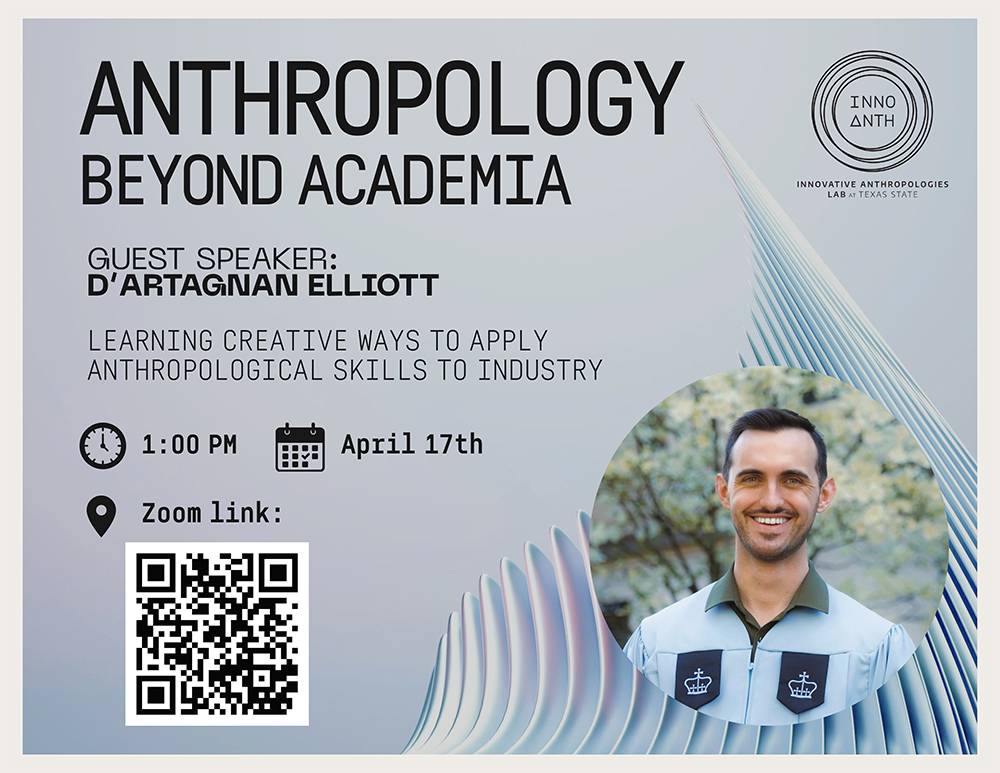
What can you do with an anthropology degree? If you're not planning to become a professor, this conversation is for you. Join Texas State and Columbia University alum, D’Artagnan Elliott, for a practical look at how anthropology translates into real-world impact. From business strategy to literature to policy to marketing, this session explores how anthropological thinking moves beyond theory and into action. Hosted by the Innovative Anthropologies Lab.
Date | Friday, April 17, 2026
Time | 1:00 pm
Location | Online via Zoom
-
Dr. Lauren Meckel to speak at FAS Meeting
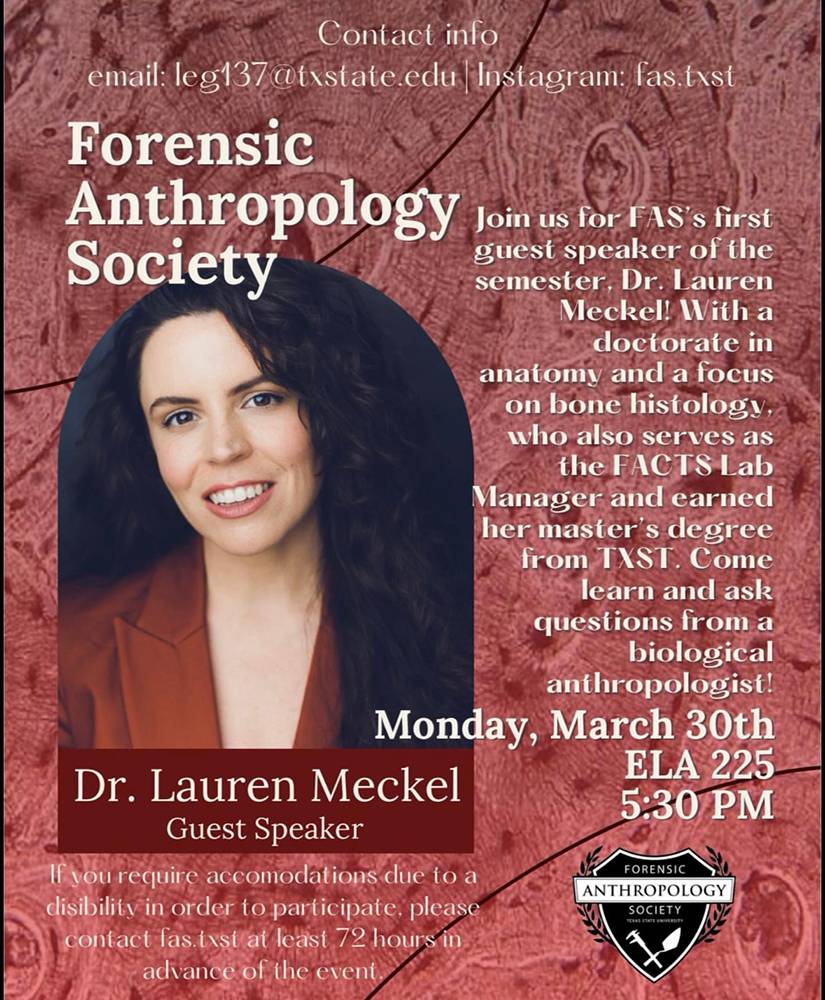
Dr. Lauren Meckel will be the guest speaker for the Forensic Anthropology Society meeting on Monday 3/30 ELA Rm 225 @ 5:30PM. Come learn about bone histology, have some snacks, and ask questions!
-
Edward González-Tennant to give Lecture at Bard Graduate Center in April
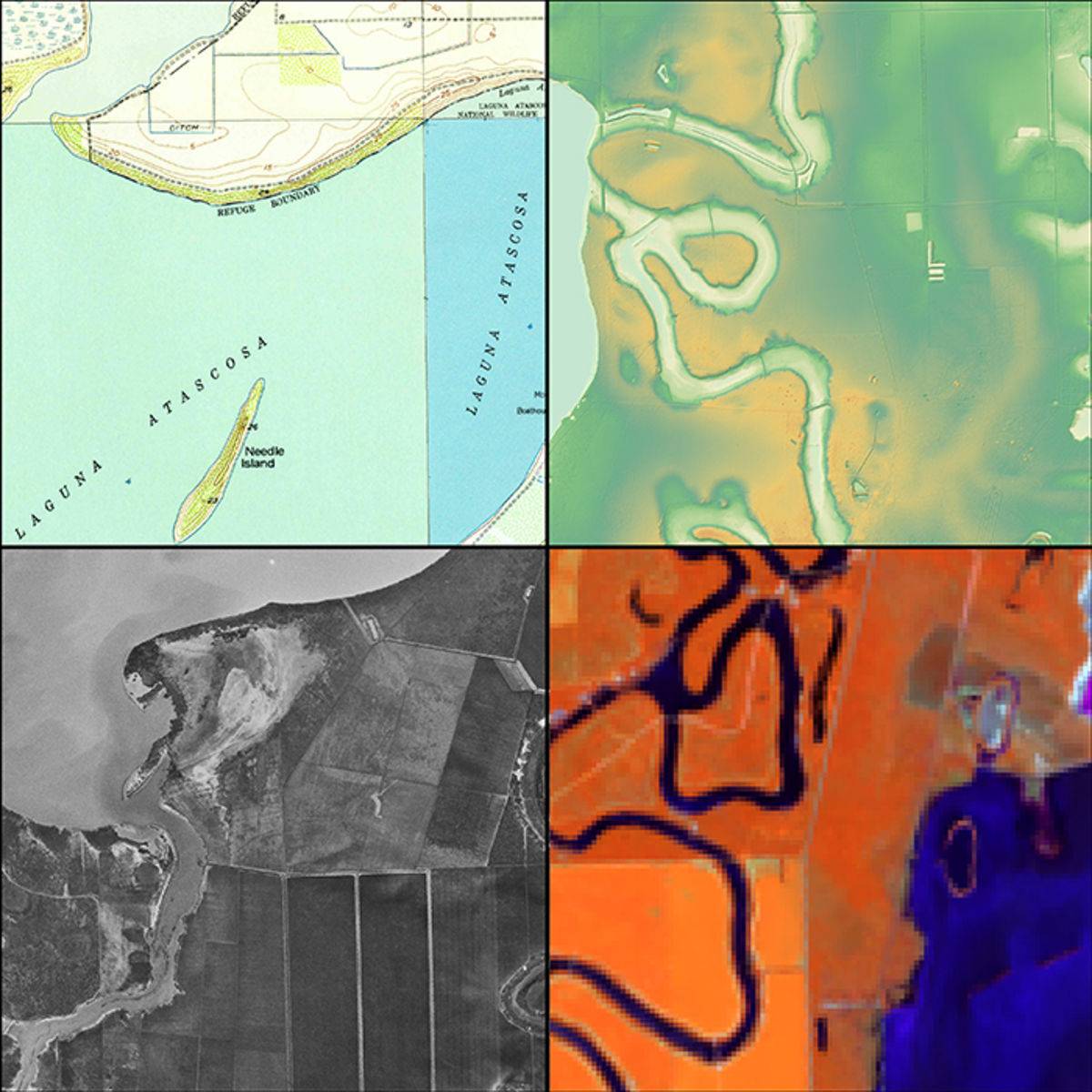
Edward González-Tennant will deliver a lecture entitled "Digital Technologies and Archaeological Reclamation" for the "Archaeological Encounters Lecture" series at the Bard Graduate Center in New York City on April 8, 2026. The talk discusses how digital technologies support work which positions archaeological expertise at the service of communities and the public. These case studies illustrate the centrality of digital technologies—e.g., GIS (geographic information systems), GPR (ground penetrating radar), LiDAR (light detection and ranging), photogrammetry, and VR (virtual reality)—in revealing new historical truths that facilitate public dialogue and engagement.
-
PhD Student Publishes Archaeology-Themed Children’s Book
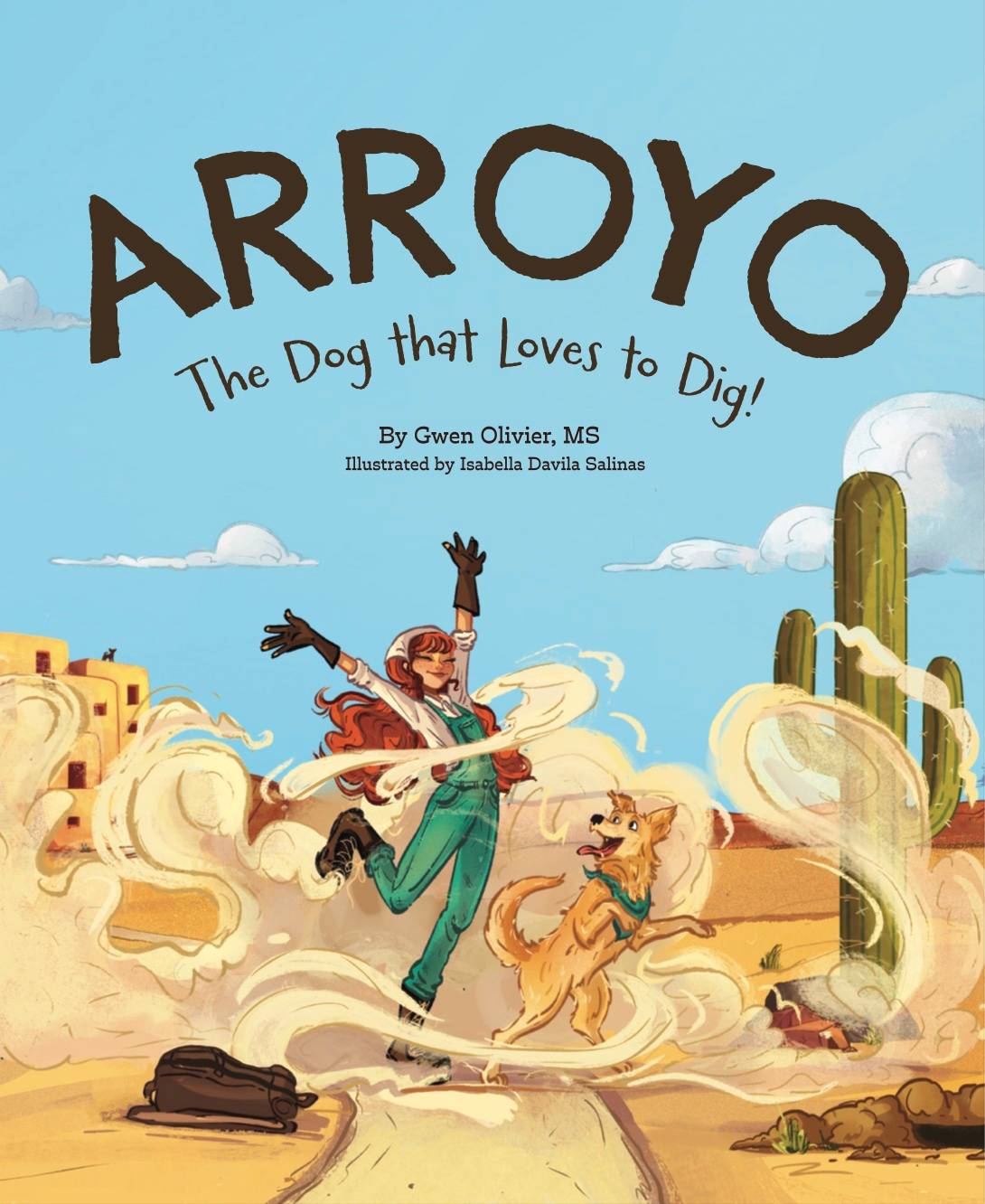
PhD student, Gwen Olivier, recently published her children’s book, Arroyo: The Dog that Loves to Dig! Inspired by her fieldwork and her dog, Arroyo introduces basic archaeological concepts through playful storytelling. Learn more at the book launch website.
-
Anthropology Movie Night | Sinners

Join the Department of Anthropology for a movie night!
Date | March 26, 2026
Time | 6:00 pm
Location | ELA 114The department will be screening Sinners. Refreshments provided and all are welcome.
-
2026 Anthropology Student Research Conference
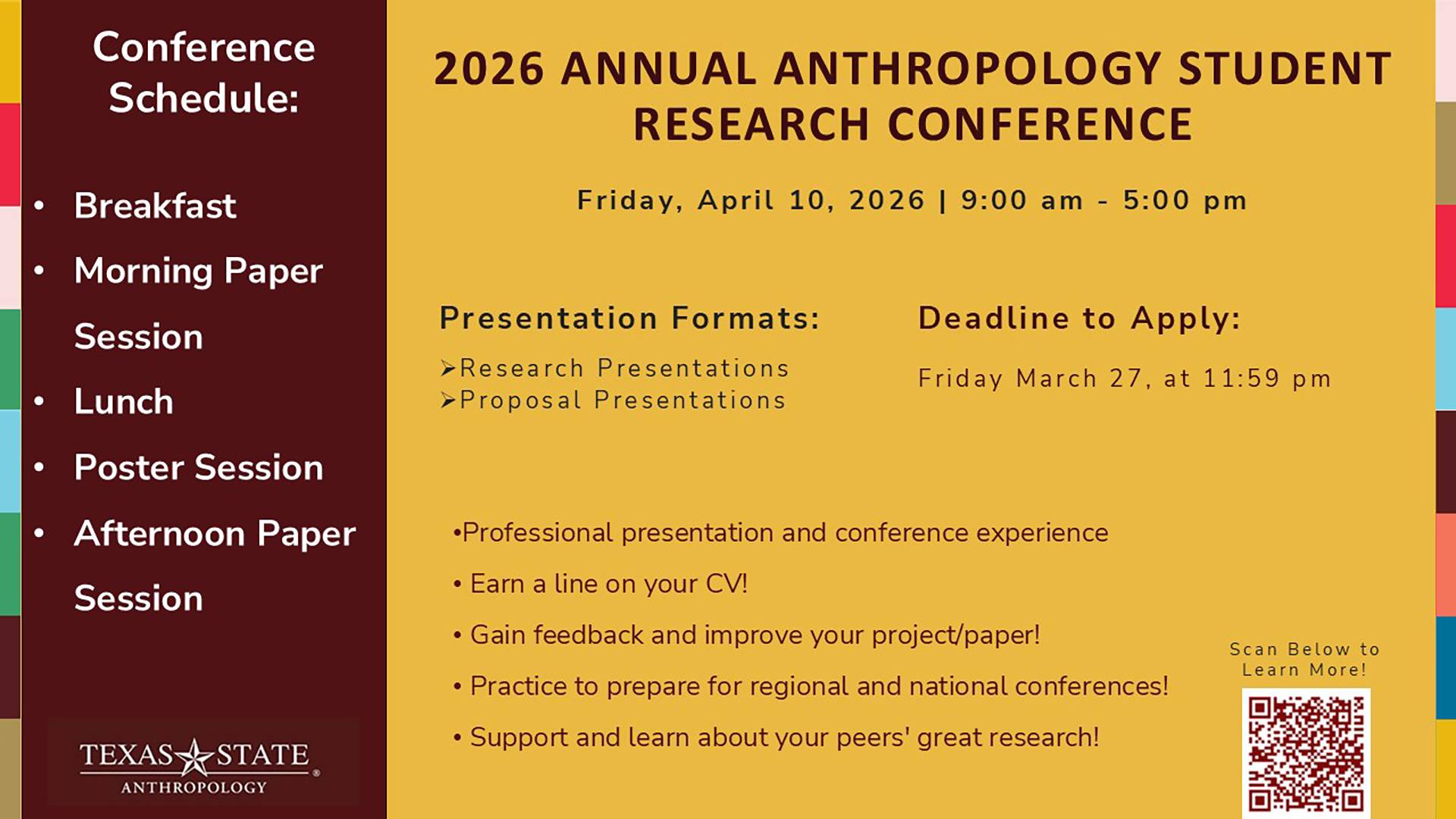
Exciting research is going on across all fields of anthropology at Texas State!
Join us for the 2026 Texas State University Anthropology Research Conference to hear students share some of their research from 9am – 5pm on Friday, April 10, 2026!
Visit the Research Conference Website for paper submissions and more information.
-
Winds From The West: The Meanings and Movements of Maya Musical Instruments
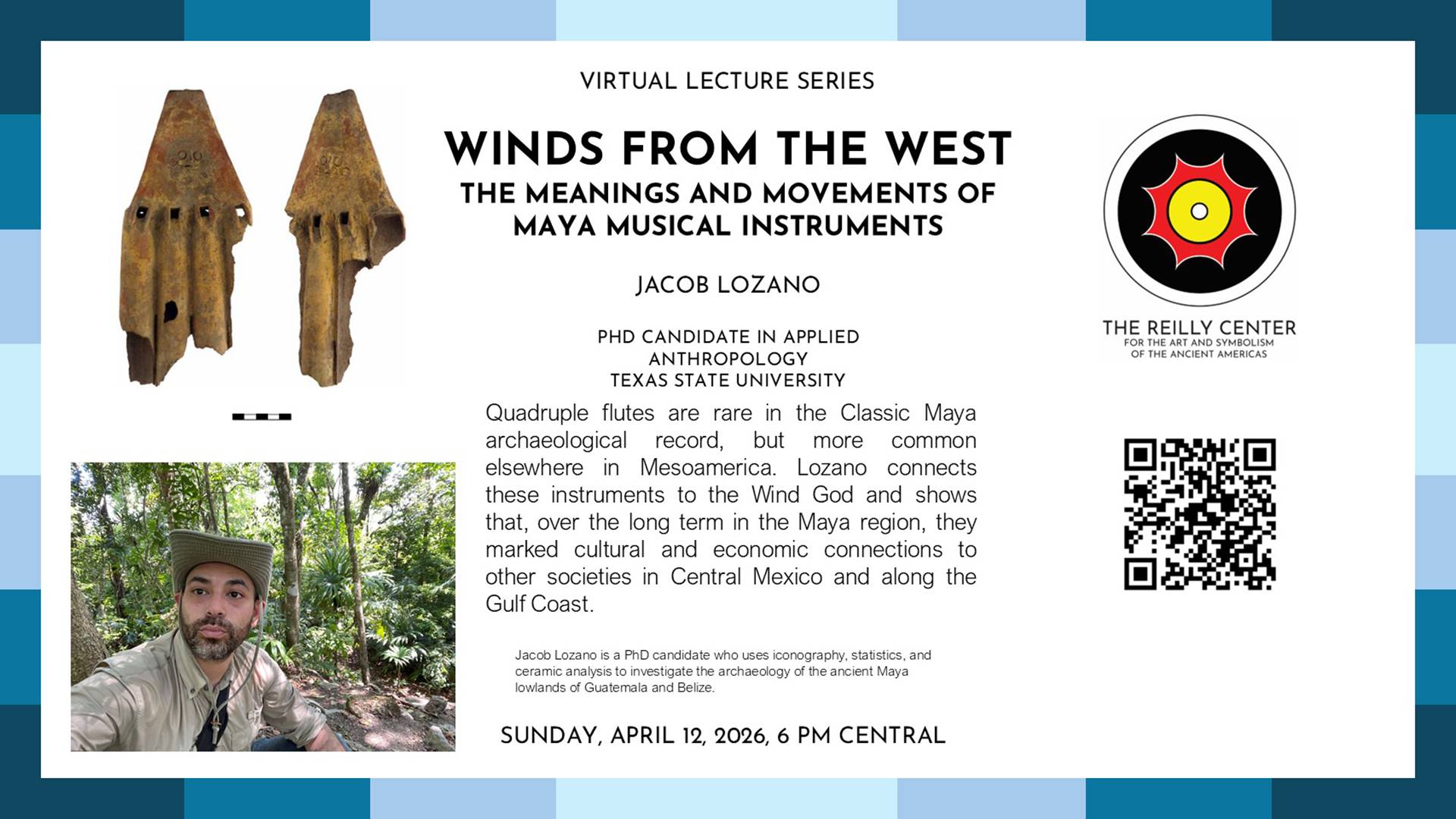 Join the Reilly Center for our first Virtual Lecture Series presentation!
Winds From The West: The Meanings and Movements of Maya Musical Instruments
Jacob LozanoQuadruple flutes are rare in the Classic Maya archaeological record, but more common elsewhere in Mesoamerica. Lozano connects these instruments to the Wind God and shows that, over the long term in the Maya region, they marked cultural and economic connections to other societies in Central Mexico and along the Gulf Coast.
Sunday, March 12, 2026 | 6:00 pm | Online via Zoom
Contact Dr. Nick Carter for Zoom information. -
Graduate Brown Bag Talks | Hitties and Horses - Myriah Allen
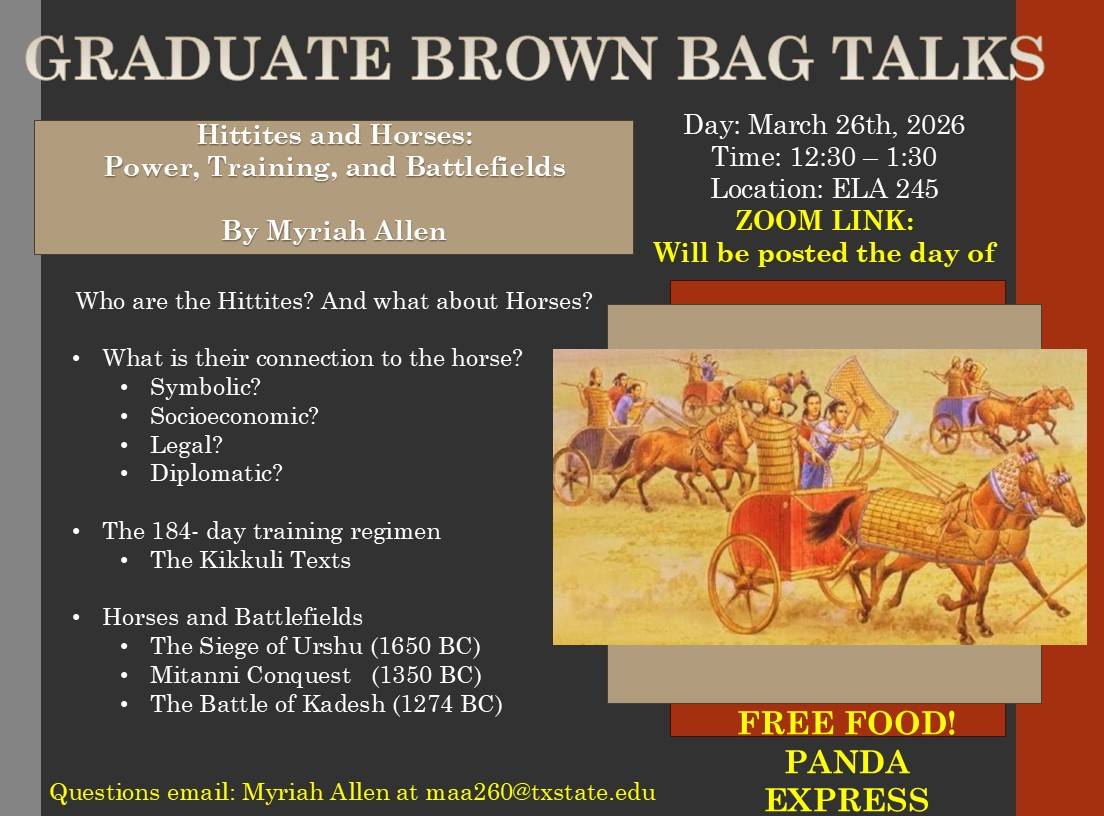
Join us on March 26th for a Graduate Brown Bag Talk
Hitties and Horses: Power, Training, and Battlefield
Myriah AllenMarch 26, 2026
12:30 - 1:30
ELA 245 -
Masters Student, Annemarie Teagle, Presents Ethnographic Research on Grateful Dead Fans at Conference
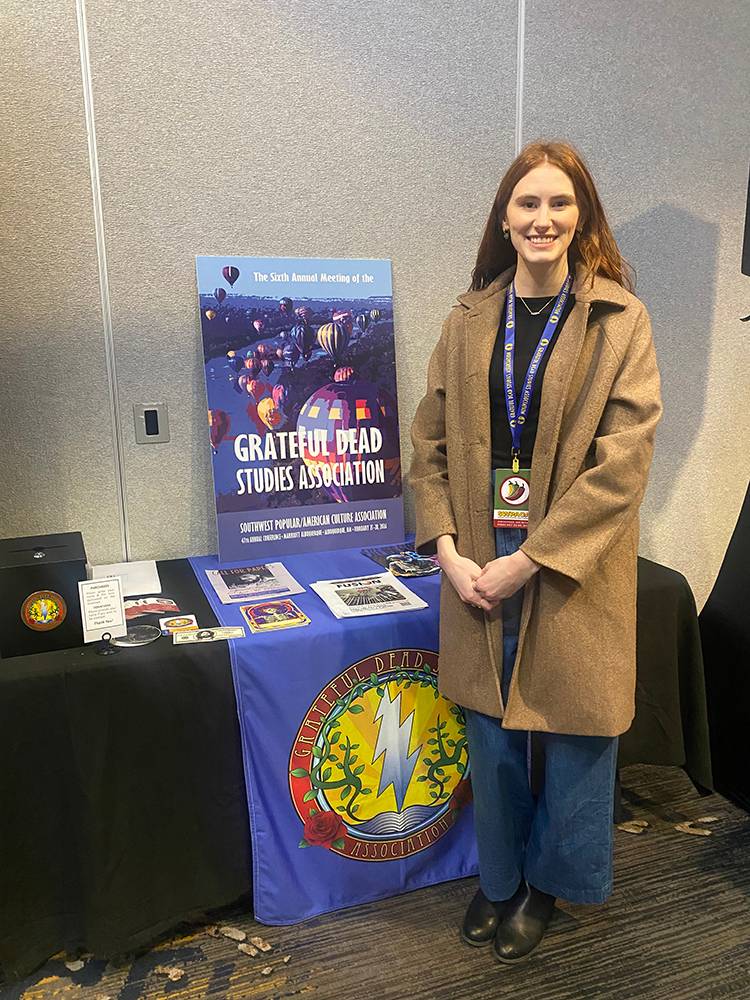
Annemarie Teagle, second year masters student in cultural anthropology, presented her ethnographic research on Deadheads (fans of the Grateful Dead) at the Southwest Popular/ American Culture Association (SWPACA)'s sixth annual meeting of the Grateful Dead Studies Association. Her presentation, "If You Get Confused...": Deadhead Cultural Adaptations in a Changing Musical Landscape, and her thesis explore changes in Deadhead culture as time, the band, and the music performance landscape shifts.
-
Anthropology Faculty Lead a Team of Doctoral Students to Search for WWII MIA Soldiers in France
Drs. Todd Ahlman, Nick Herrmann, and Ashley McKeown were funded by a grant from the U.S. Defense POW/MIA Accounting Agency (DPAA) to locate the remains of four missing crewmen from a crashed WWII flight. They led a team of 11 applied anthropology doctoral students plus a recent graduate who served as an interpreter on the four-week dig.
Learn more on the Texas State News page.
-
Professor Bousman receives funding for Palo Duro Canyon archaeological survey
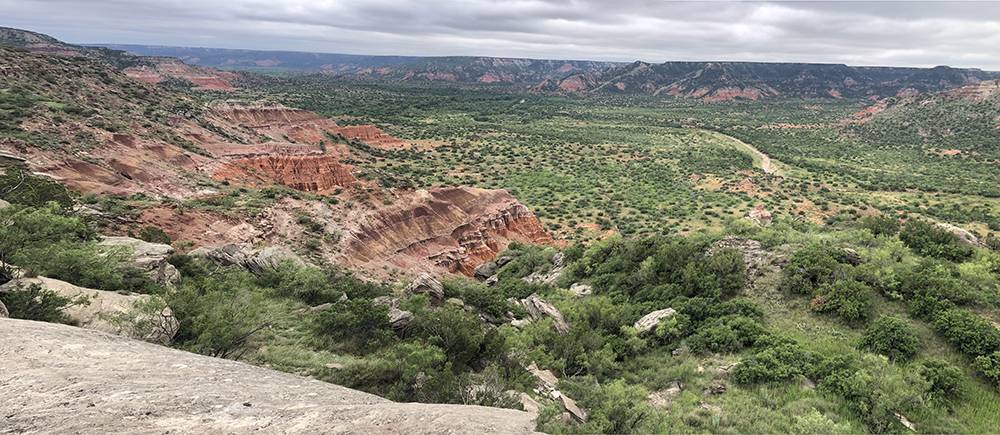
In the summer of 1541 the Coronado expedition camped in two canyons (barrancas) on the eastern edge of the Llano Estacado in their attempt to find Quivira-the lost cities of gold. One of the Coronado campsites has been located but Coronado’s second Barranca campsite has never been found. Through a detailed review of the Coronado narratives and a GIS analysis of the landscape and travel schedules, Bousman believes he has identified the most likely location of the missing campsite. It is in Palo Duro Canyon. The Summerlee Foundation funded a proposal to look for Coronado’s lost Barranca campsite. In May a group from Texas State, TPWD and THC Stewards will begin their search. The photograph shows the part of Palo Duro Canyon where Bousman belives the Coronado Expedition camped in 1541.
-
Doctoral Student, Erin Mathison, Featured in Hillsview Magazine for NSF Fellowship
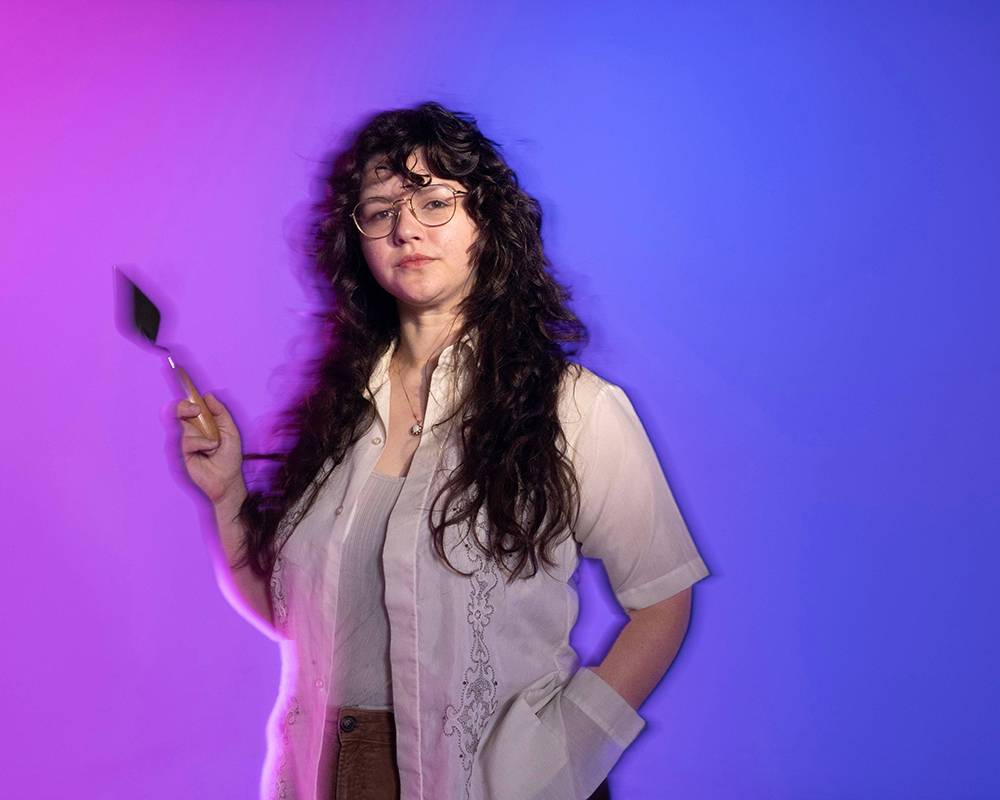
Doctoral Student, Erin Mathison, Featured in Hillsview Magazine
Erin Mathison has been featured in Hillviews, The Magazine of Texas State University (Spring 2026 issue). In the article, Erin explains how she uses geoarchaeology to better understand past life. As a geoarchaeologist, Erin Mathison specializes in delving into the nitty-gritty.
The first-year doctoral student studies soil geology to better understand the lives of past people and she has a fitting field lab at Spring Lake, the headwaters of the San Marcos River and a jewel of the San Marcos Campus. Mathison’s work caught the attention of the National Science Foundation, which awarded her a $159,000 Graduate Research Fellowship Program grant in July. The funding will cover three years of tuition and living expenses and also enable Mathison to start her dissertation. She intends to conduct her research in the volcanic uplands of the Alaskan Peninsula.
-
New Book from Dr. Angela K. VandenBroek: Anthropology and AI
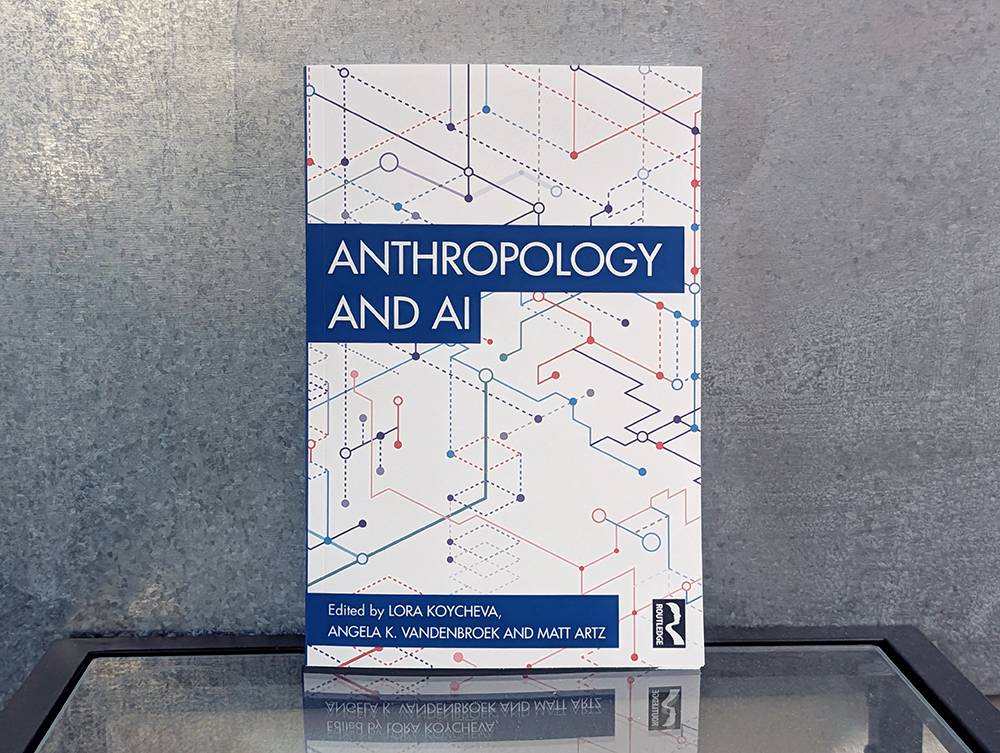
Dr. Angela K. VandenBroek, assistant professor of anthropology at Texas State, has a new book out! Edited with Lora Koycheva and Matt Artz, Anthropology and AI starts off with a deep dive on anthropology's long history with artificial intelligence—all the way back to its earliest days in the 1940s —as anthropologists have built, shaped, critiqued, and challenged AI throughout its history.
The volume includes 10 chapters capturing current conversations in the anthropology of AI from across applied and academic approaches—offering challenges, frameworks, and applications for both the fields of AI and anthropology.
In the conclusion, the editors discuss the future of Anthropology and AI from each of their different vantage points—drawing out the tensions and possibilities at the intersections of these two fields going forward.
Dr. VandenBroek's individual contribution to the volume introduces the concept of "bullshit epistemics" to challenge us to think beyond the common critique of AI confabulations and shift our attention to how AI changes the ways that we understand and evaluate knowledge when it is radically unsituated, decontextualized, and unaccountable.
-
Anthropology Day 2026
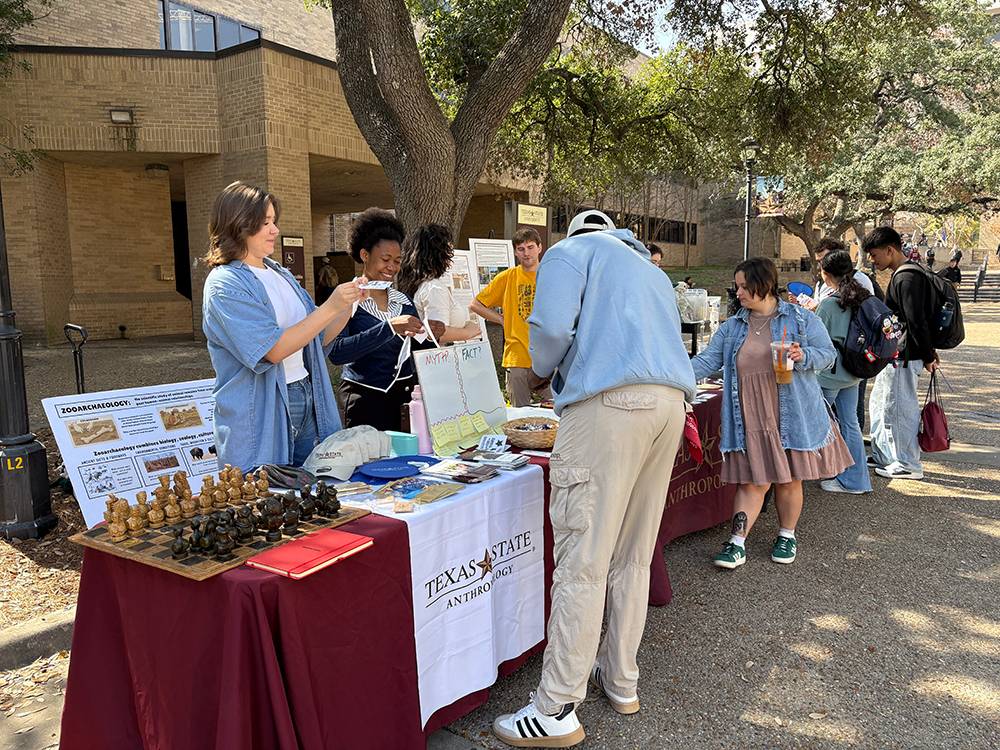
Graduate Students from the Department of Anthropology held a tabling event for National Anthropology Day. These tables showcased the four subfields of Anthropology: Cultural, Biological, Linguistics, and Archaeology with artifacts, interactive games, and freebies for those who stopped by. These volunteers talked to many interested students on Texas State campus regarding the different aspects of Anthropology and answering any questions students may have had. This event spread the word on Anthropology and encouraged fellow students to become interested in the field and its different subfields.
-
The Innovative Anthropologies Lab on World Anthropology Day
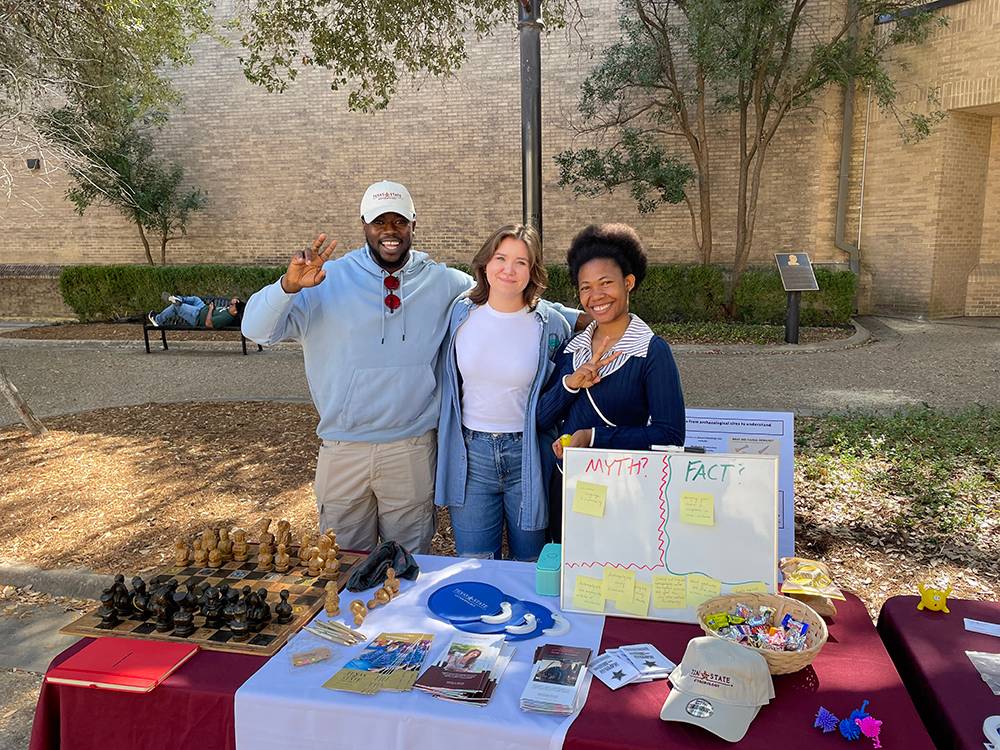
The Innovative Anthropologies Lab represented cultural and linguistic anthropology at the department tabling event for World Anthropology Day! Lab Staff held a zine makerspace workshop the day before to craft shareable materials for promoting the subfields to Texas State students. (Pictured, left to right: PhD students, Wònú Ajayi, Caroline Story, and Faith Itiola.)
-
Winged Victory: A Mysterious Glyph, A Mysterious God
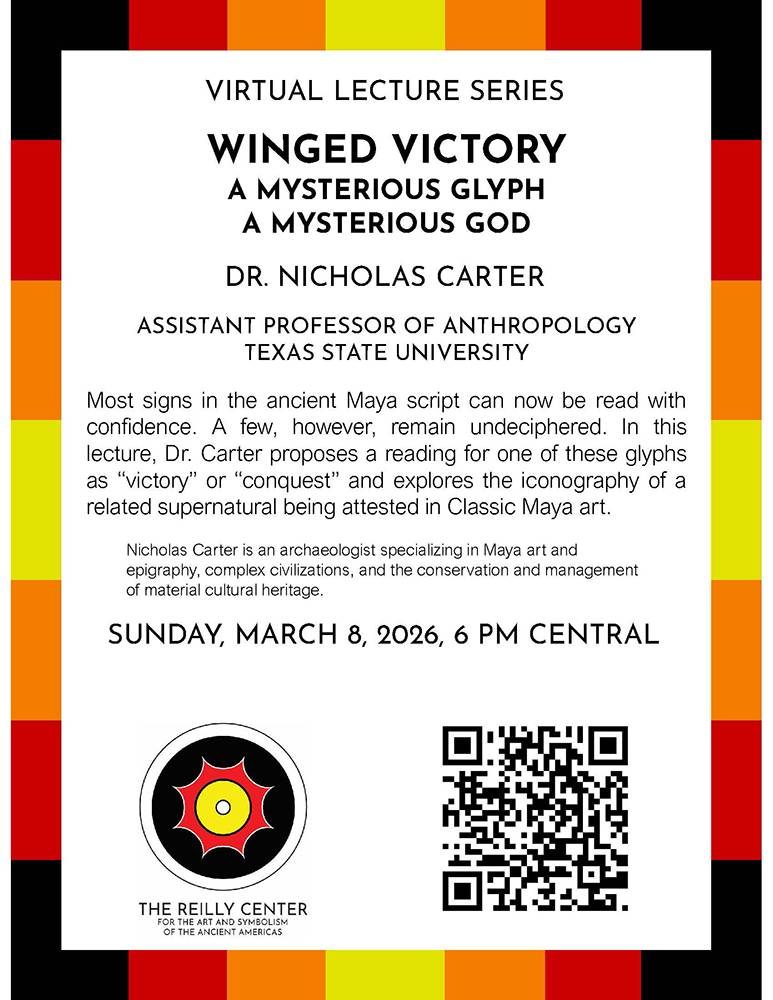
The Reilly Center for the Art and Symbolism of the Ancient Americas announces the first of an ongoing series of virtual lectures on the art and archaeology of Native America. In the inaugural talk, "Winged Victory: A Mysterious God, a Mysterious Glyph," Nicholas Carter proposes a reading for a hitherto undeciphered Maya hieroglyph as "victory" or "conquest" and explores the iconography of a related supernatural being attested in Classic Maya art.
Sunday, March 8, 2026 | 6:00 pm
Contact Dr. Nicholas Carter for more information.
-
Dr. Ahlman Awarded over a Million Dollars for Fort Leonard Wood Project
Congratulations to Dr. Todd Ahlman and the Center for Archaeological Studies who have been awarded an additional $1,133,140 from the United States Department of the Army for the project “Fort Leonard Wood IGSA (Intergovernmental Support Agreement): Environmental Compliance Year 4."
-
Anthropology Department Welcomes New Chair
For the past five years, Dr. Christi Conlee has served as the Chair of the Anthropology Department. Dr. Conlee ushered the department out of the pandemic, guided us through a significant change in university leadership, and the "Race to R1." She absorbed stress from above and below while continually providing steady and grounded leadership.
During her tenure as Chair, she worked to clarify and formalize policies, move programs forward, and ensure the department runs smoothly. Dr. Conlee generously and patiently held space for faculty, staff and students to share ideas, experiences, and concerns. The department truly appreciates her service! As she transitions back into a full-time faculty role, Dr. Conlee will be teaching more classes and devoting additional time to student mentorship and research.Following Dr. Conlee's departure, the Anthropology Department is pleased to announce the appointment of Dr. Nicole Taylor as Chair effective January 1, 2026.
Dr. Taylor earned her bachelor's degree in English from Texas State University, her master's degree in English from Texas A&M University, and her doctoral degree in Anthropology from The University of Arizona. She joined Texas State as an Associate Professor in 2016 and was tenured in 2019. During her time at Texas State, she has served in various service and leadership roles, including Ph.D. Program Coordinator, Associate Chair, and Faculty Senate Liaison. Prior to joining to Texas State, she worked in nonprofit and corporate settings conducting research and evaluation in the areas of substance abuse, education and poverty, childhood obesity, school climate, and institutional culture. She then served for five years as the Director of Scholar Programs at the School for Advanced Research in Santa Fe, New Mexico.Dr. Taylor is a cultural anthropologist whose research explores contemporary social issues among youth in the United States, including social media engagement, body image concerns, childhood obesity, and the experiences of college students in higher education. Her recent work focuses on the development of digital methods for social media research. Her work has been funded by two National Science Foundation grants and resulted in two ethnographic monographs, a co-edited special journal issue, a co-edited methods volume, and 12 peer-reviewed articles and chapters.
-
Dr. Carolyn Boyd Featured in the University Star
Congratulations to Dr. Carolyn Boyd whose research was recently featured in The University Star! The piece, titled Research Continues to Discover Meaning Behind Historical Mesoamerican Murals, interviews Dr. Boyd about her continued work with the rock art found along the Pecos and Rio Grand rivers.
-
Britt Bousman to give Brettell Lecture at SMU in April
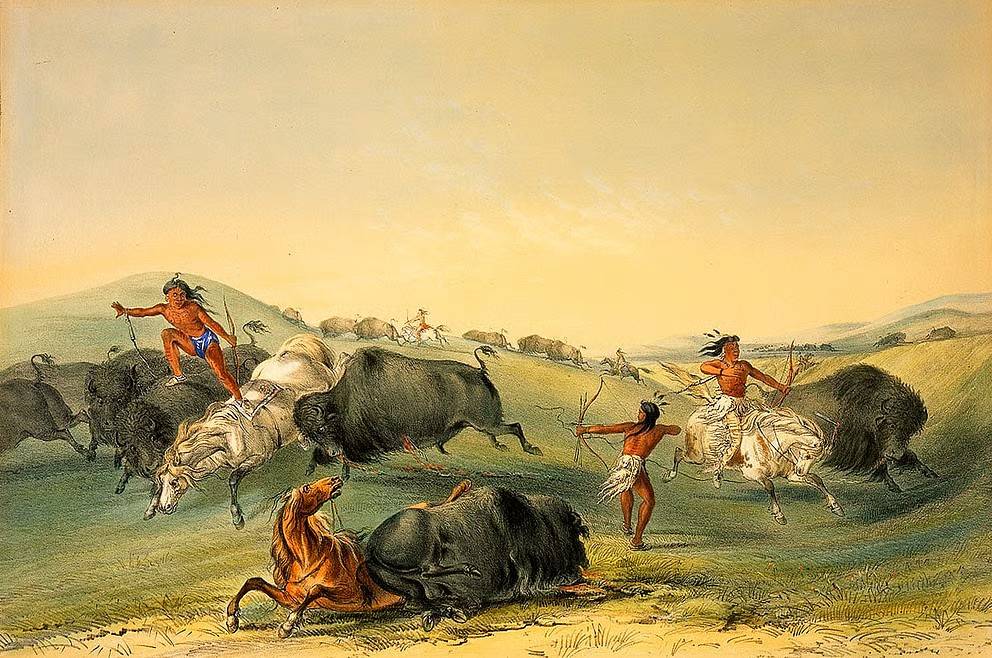
Britt Bousman will deliver a lecture entitle “Conquistadors, Bison Hunters and Horses in the Southern Plains” for the "Caroline B. Brettell Seminars in Anthropology" at Southern Methodist University’s Anthropology Department on April 10th. The Brettell Seminars in Anthropology series is the flagship lecture series of the Department of Anthropology. Bousman received his BS, MA and PhD degrees from SMU.
-
-
Fall 2025
-
Dr. Boyd coauthors landmark study on Texas rock art in Science Advances
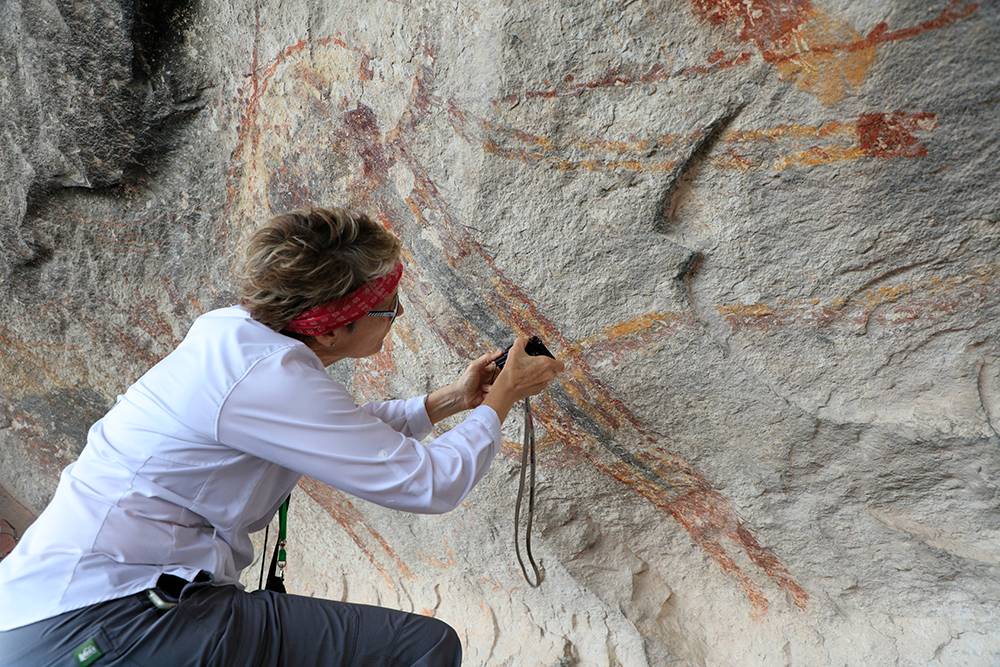
A new article in Science Advances coauthored by TXST archaeologist Dr. Carolyn E. Boyd presents the most comprehensive chronology to date for the iconic Pecos River style murals of the Lower Pecos Canyonlands. Using 57 direct radiocarbon dates and 25 dates on mineral accretions across 12 sites, the TXST/Shumla team demonstrates that hunter-gatherer artists produced these elaborate polychrome murals for more than 4,000 years, beginning around 5760–5385 years ago. The study shows that muralists followed consistent rules of composition, color sequencing, and symbolism over millennia—evidence of a long-lived metaphysical tradition tied to the region’s culturally powerful landscape. The findings position the Lower Pecos as a “cultural keystone place” and offer rare insight into the deep origins and persistence of a pan–New World cosmovision later expressed in Mesoamerican societies and continuing into the present.
-
Senior, Isabella Mavourneen, published article on Neanderthal DNA
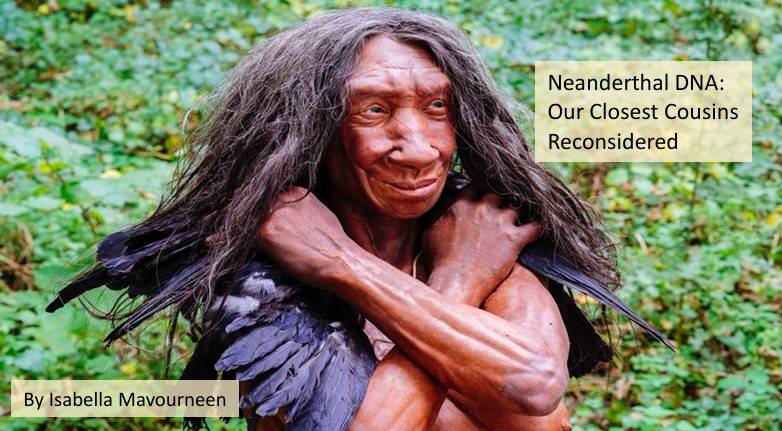
Congratulations to senior, Isabella Mavourneen (minoring in Anthropology), who recently published a research article on Neanderthal DNA in the Spring 2025 volume of the Texas State Undergraduate Research Journal. This research was undertaken as part of an Honors Course under the direction of Dr. Britt Bousman. She proposed the topic of the honors course after taking World Prehistory with Dr. Bousman.
-
Professor Jill Pruetz will speak at the Houston Museum of Natural Science this November
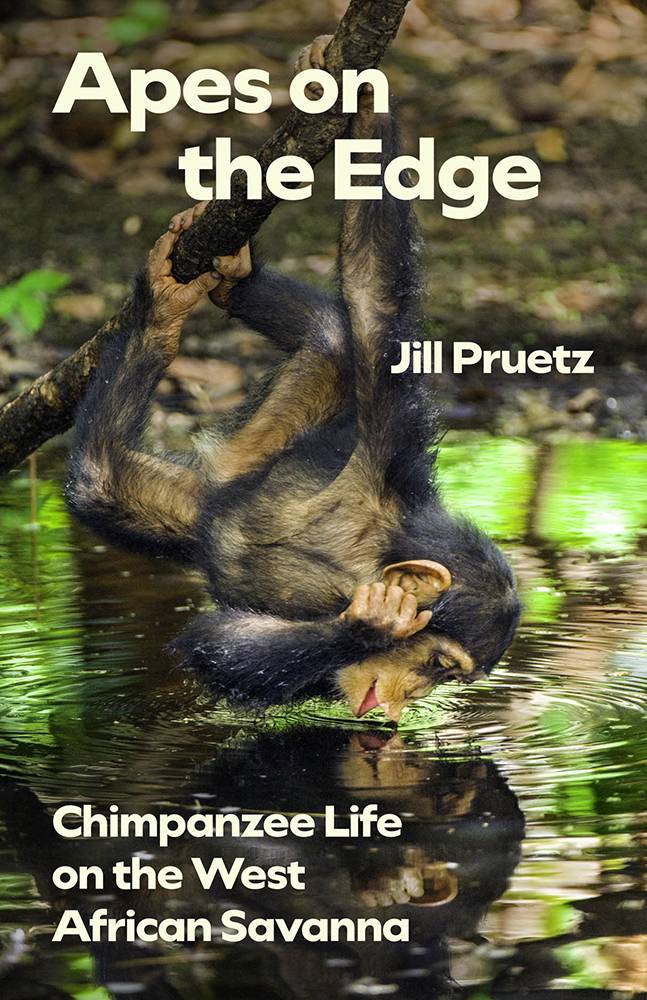
The Leakey Foundation and Houston Museum of Natural Science are hosting Dr. Jill Pruetz for a lecture and book signing for her latest published book Apes on the Edge on November 3rd.
"Join primatologist Dr. Jill Pruetz as she shares discoveries from her extensive field research, exploring the unique characteristics of these chimpanzees and the dynamics between them and the people they live alongside. Drawing from her recently published book, Apes on the Edge, Dr. Pruetz explores the extraordinary adaptations and behaviors that set the Fongoli chimpanzees apart from the forest-dwelling chimpanzees known from other regions of Africa, underscoring the importance of protecting these remarkable apes and their fragile habitat." - Leakey Foundation.
Photo Credit: Leakey Foundation, Book Cover: Frans Lanting and U Chicago Press
-
Meet the Professors
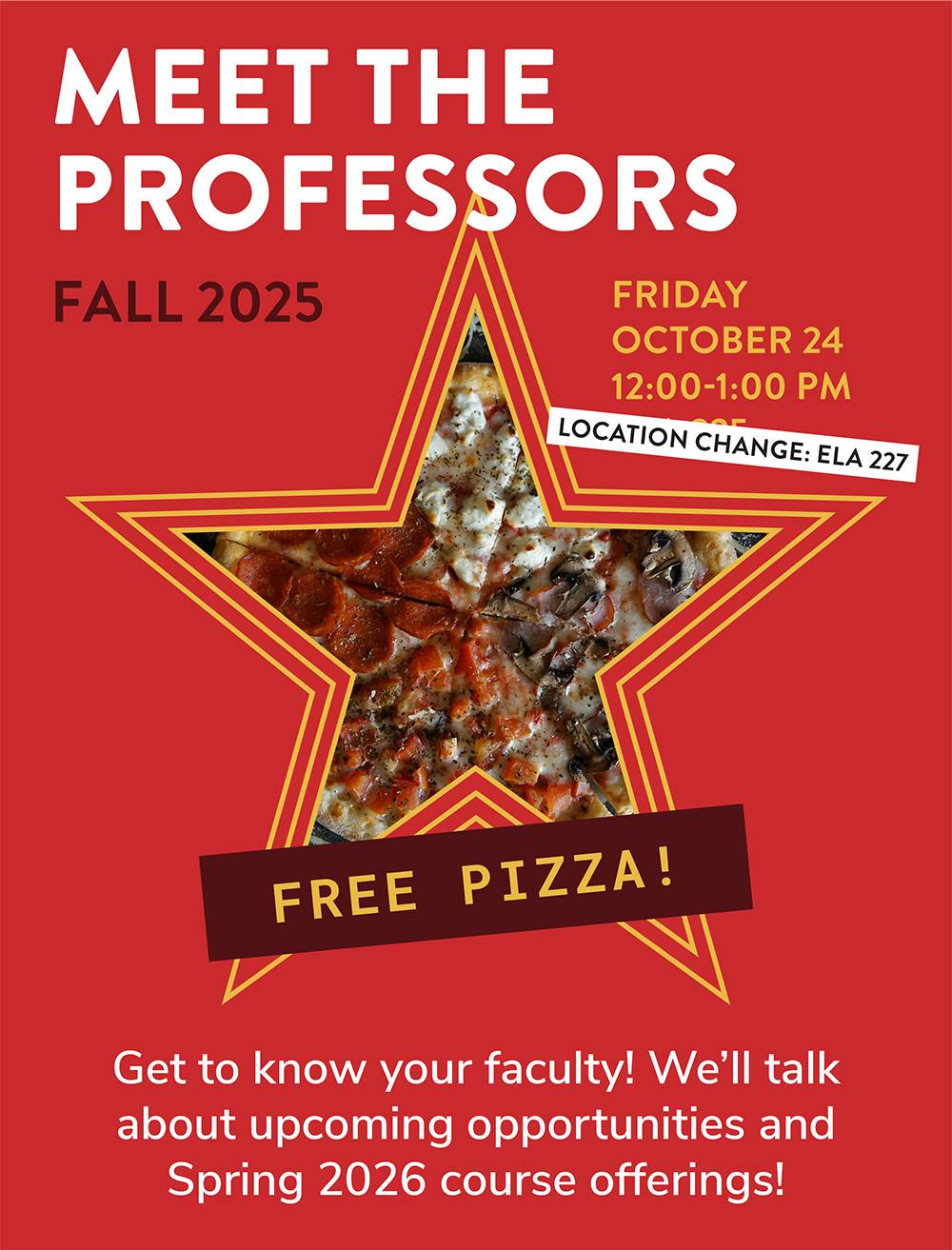
Come meet your professors!
The Anthropology Department invites students students to come and get to know your faculty! We'll talk about upcoming opportunities and Spring 2026 course offerings.
Free pizza will be provided!
Date/Time | Friday, October 24 - 12:00 - 1:00 pm
Location | ELA 227 -
Veterans Curation Program Funding
The Center for Archaeological Studies (CAS) has been awarded funding for a new Veterans Curation Program (VCP) session during the 2026 Fiscal Year. The Satellite VCP lab at CAS has been led by Amy Reid (CAS Curator and Assistant Director) since 2018, and this new session will include hiring four student veteran technicians and two returning assistant lab managers, Rob Curran and Katharine Lukach.
The VCP, funded by the U.S. Army Corps of Engineers (USACE), provides paid employment and vocational training for recently separated veterans using archaeological collections administered by USACE. Veterans working in the CAS laboratory are being trained in data entry, report writing, photography, scanning technologies, and many other transferable job skills to help prepare them for new careers while also helping to rehabilitate important archaeological collections and associated records for long-term curation and future research.
-
Nadia Luis (MA, 2026) Shares Their Research on Platypus, The CASTAC Blog
What influences our interactions and encounters with soils? Nadia Luis (Anthropology MA student) explores this question through their research on food forests and community gardens in Texas in a new post on Platypus, The CASTAC Blog. They invite us to think about soils and human bodies through possibilities of collaboration. Read the post on the blog or listen on Platypod, the CASTAC Podcast via Spotify or Apple Podcasts.
-
TXST Anthropology at 4s Annual Meeting
TXST Anthropology and the InnoAnth Lab was well-represented this year at the annual meeting of the Society for the Social Study of Science (4s) in Seattle. Dr. Nicole Taylor, Dr. Angela K. VandenBroek, Caroline Story (PhD Student) and Manar Naser (MA 2025) presented papers on digital methods, tech entrepreneurship, and large language models.
-
Texas State Primatologists present at the 47th Annual Meeting of American Society Primatogists in Chicago, IL
Anthropology Graduate Students Katie Gerstner (doctoral), Lydia Lehman (Masters) and Raymond Vagell Ph.D present their research at the 47th Annual Meeting of the American Society of Primatologists. Katie, Lydia, and Raymond study primate conservation and care with Dr. Jill Pruetz.
Lydia was invited to present her artwork in The Power of Art in Primate Conservation Symposium. In the provided link, all artists and descriptions of their work can be found. Katie chaired the Diet and Ecology Symposium and presented data on chimpanzee drinking behavior from her dissertation. Raymond presented his dissertation research about touchscreen enrichment with captive lemurs.
-
Anthropology Ph.D. Candidate, Antonio Beardall, gets article published
Antonio Beardall, Texas State University Ph.D. candidate in Anthropology with a focus on Archaeology, recently published an article, Peopling Archaeology in Belize: Humanity Beyond the Remains, co-authored with Belizean educator, Norberto Quetzal. The article is based on Beardall's 2024 conference presentation at the Belize Archaeology Symposium, discussing community archaeology and engagement initiatives in Belize, including his dissertation research at Texas State. This is the first article in Belizean archaeology that centers engagement with and inclusion of Belizean citizens in archaeological research. The article was published in the Research Reports on Belizean Archaeology Vol. 19. published by the Belizean Institute of Archaeology under the National Institute of Culture and History.
-
Documenting the Oral Literature of the Teenek People – Death Rituals, Practices, and Beliefs Grant Awarded to Dr. Karla Hernandez-Swift
Dr. Karla Hernandez-Swift (PI) and Museum Director Servando Guierrez Carillo (co-PI) received a $9,998 Firebird Foundation Anthropological Research Grant for their project, “Preserving Voices: Documenting the Oral Literature of the Teenek People – Death Rituals, Practices, and Beliefs.” Conducted in Dr. Hernandez-Swift’s hometown of San Luis Potosí, Mexico, this initiative also provides resources for engagement and training of the Teenek community to ensure the ongoing collection and preservation of oral histories.
-
Announcing the 2025-2026 Anthropology Speaker Series
Join us for this year's speaker series featuring Agustín Fuentes (Aug. 29), Alfredo González-Ruibal (Oct. 17), and Melissa Leach (Nov. 14). Our speakers will be discussing the challenges posed to and by science in these challenging times. Through engaging presentations on their new books, these scholars bring bold, timely research into the heart of our Texas State Anthropology learning community. Learn more and register to attend.
-
Where can TXST Anthropology take you next? Join us for a virtual graduate school open house!
Join us for a virtual open house to learn about graduate programs in anthropology at TXST.
Meet our faculty, explore opportunities in our centers and labs, and get details on our Master of Arts and Applied PhD programs.
October 17, 2025 | 10:00 AM – 12:45 PM (Central US)
-