
Banished Citizens:
A Book Talk by Marla Ramírez
Dr. Marla Ramírez | University of Wisconsin - Madison
Tuesday, March 3, 2026 | 3:30 pm
TMH 104
Registration Closed


Dr. Marla Ramírez | University of Wisconsin - Madison
Tuesday, March 3, 2026 | 3:30 pm
TMH 104
Registration Closed
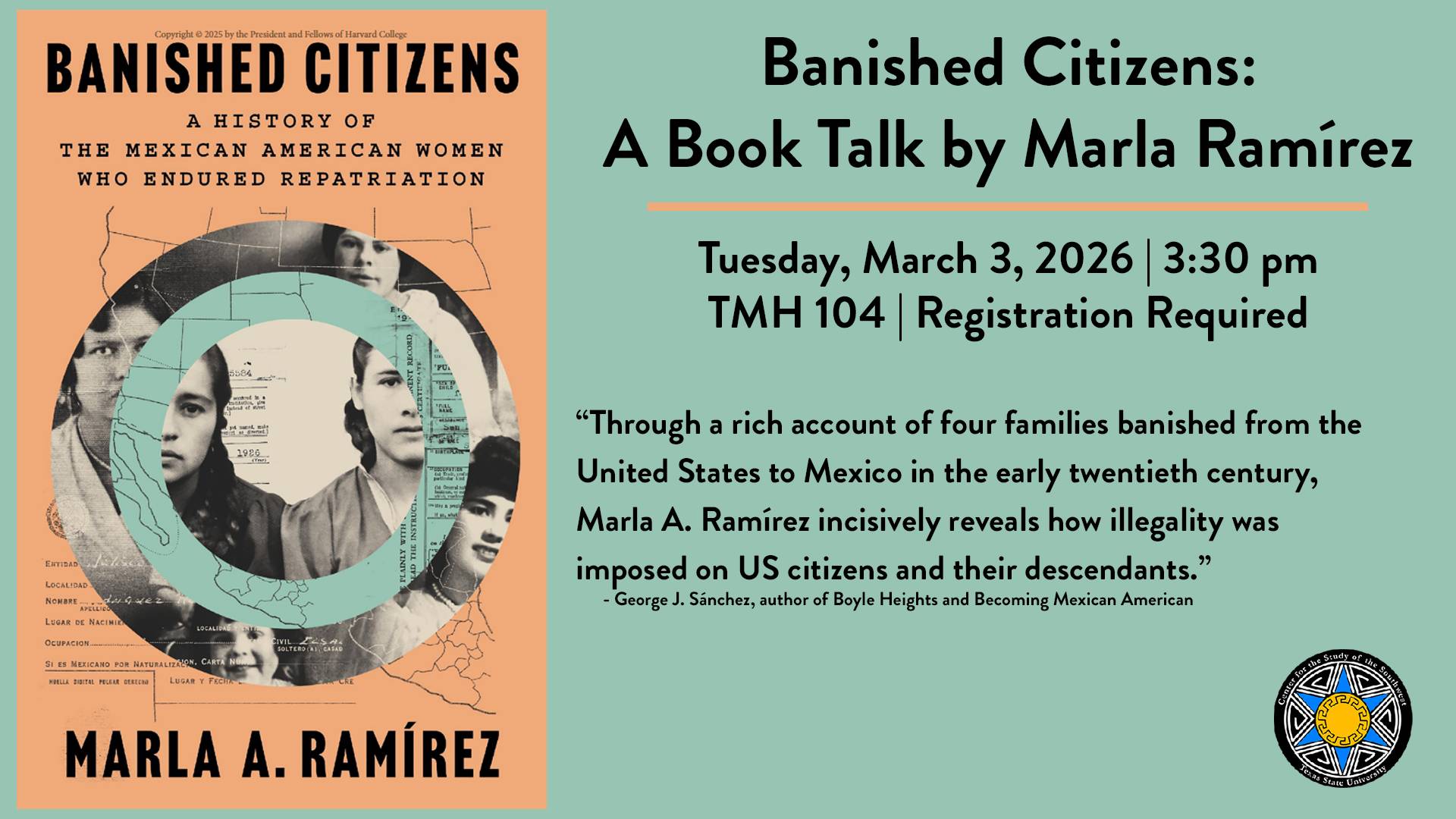
A moving portrait of a grim period in American immigration history, when approximately one million ethnic Mexicans—mostly women and children who were US citizens—were forced to relocate across the southern border.
From 1921 to 1944, approximately one million ethnic Mexicans living in the United States were removed across the border to Mexico. What officials called “repatriation” was in fact banishment: 60 percent of those expelled were US citizens, mainly working-class women and children whose husbands and fathers were Mexican immigrants. Drawing on oral histories, transnational archival sources, and private collections, Marla A. Ramírez illuminates the lasting effects of coerced mass removal on three generations of ethnic Mexicans.
Ramírez argues that banishment served interests on both sides of the border. In the United States, the government accused ethnic Mexicans of dependence on social services in order to justify removal, thereby scapegoating them for post–World War I and Depression-era economic woes. In Mexico, meanwhile, officials welcomed returnees for their potential to bolster the labor force. In the process, all Mexicans in the United States—citizens and undocumented immigrants alike—were cast as financially burdensome and culturally foreign. Shedding particular light on the experiences of banished women, Ramírez depicts the courage and resilience of their efforts to reclaim US citizenship and return home. Nevertheless, banishment often interrupted their ability to pass on US citizenship to their children, robbed their families of generational wealth, and drastically slowed upward mobility. Today, their descendants continue to confront and resist the impact of these injustices—and are breaking the silence to ensure that this history is not forgotten.
A wrenching account of expulsion and its afterlives, Banished Citizens illuminates the continuing social, legal, and economic consequences of a removal campaign still barely acknowledged in either Mexico or the United States.
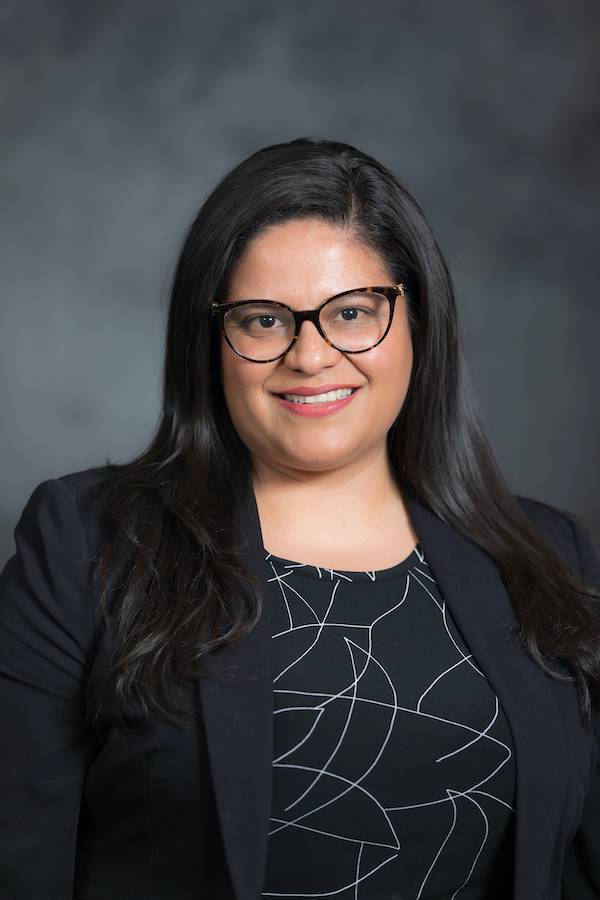
Marla Ramírez is a historian of the US–Mexico borderlands. She investigates how processes of mass immigration removals have imposed notions of illegality on citizens in their own native countries. Specifically, she centers the everyday experiences of women and children in families whose members hold varying legal statuses (citizens, legally admitted immigrants, and unauthorized immigrants)—what we refer to as “mixed-status” families today. Teaching and research interests include Mexican American banishment (generally referred to as “repatriation”), racialized citizenship, gendered migrations across the US–Mexico border, mass immigration removals, the making of illegality, historical methods, and the history of Latinx/es in the United States.
Her second book project, tentatively titled Familiar Strangers: Racialized Citizenship in the US–Mexico Borderlands, builds on her scholarship on mass removals and the making of illegality to examine the reproduction of US immigration policies in Mexico. She builds on a transnational comparative analysis of Mexican Americans and Filipino Americans removed under so-called repatriation campaigns in the US and an almost identical initiative organized to expel Chinese Mexicans from Mexico during the Great Depression. Familiar Strangers contends that US immigration laws, far from adopting a strictly domestic purview, have had distinctly transnational policy implications, to the extent that Mexican officials looked to the US legal regime to reproduce the same kinds of exclusionary policies and practices in Mexico. This relationship facilitated the production of nativist policies that revoked the citizenship rights of Mexican Americans, Filipino Americans, and Chinese Mexicans on both sides of the US–Mexico border.
She is also involved in community-engaged scholarship as part of my commitment to the Wisconsin Idea, which is rooted in the principle that education and research should not be confined by the boundaries of the classroom. She works with the Scholarly Advisory Committee for the Undocumented Organizing Collecting Initiative (UOCI) project directed by Dr. Nancy Bercaw at the Smithsonian Institution’s National Museum of American History. The UOCI is the Smithsonian’s most ambitious national collecting initiative to date. It documents the history of the undocumented immigrant activists who shifted public opinion and advocated for the implementation of the Deferred Action for Childhood Arrivals policy.