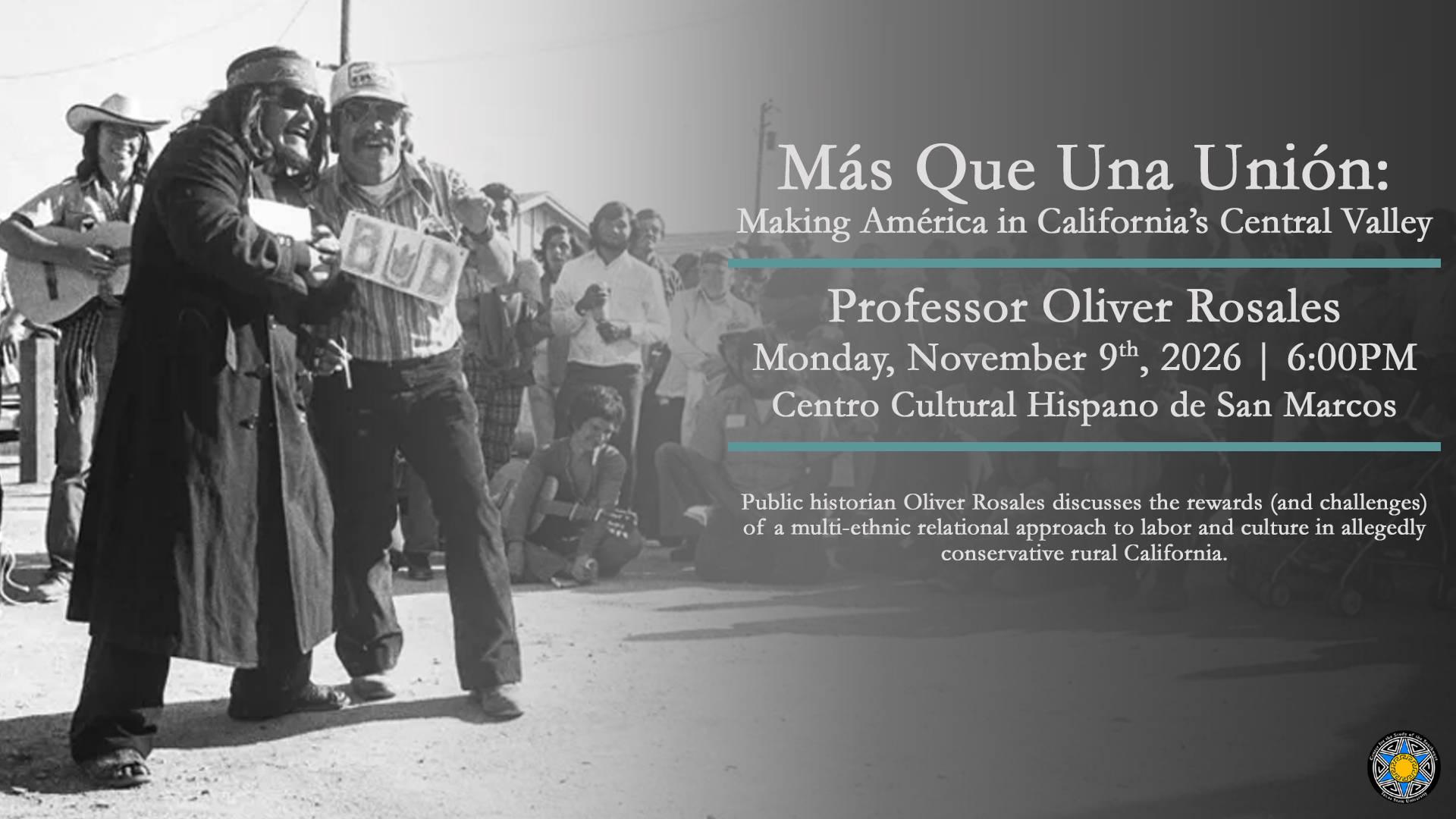
Most textbooks on twentieth century American history have a few sentences on Dust Bowl Migrants and the California Farmworker Movement in the 1960s. But not much more. Very few textbooks include expansive treatments of farmworkers and residents of rural Califonia as central to American culture. Award-winning scholar and public historian Oliver Rosales, Bakersfield College, has been part of working groups and design teams commissioned to find ways to include these broader histories in the rural exhibit spaces. As they touched on in their NEH grant, in labor, artists and advocates have built up The Joads, Richie Valens, Redbone and Teatro Campesino, “from the austere Garveyian self- reliance of Allensworth to the lyricism of the Bakersfield Sound, very few locales have captured the promise, struggles, artistry, and multi-ethnic tapestry of Rural America more than California’s San Joaquin Valley.” Oliver Rosales has been engaged in a broader near-region-wide public history project with the National Park Service and the National Endowment for the Humanities to make the Central Valley important to its residents, its tourists, its migrants and the broader history of migration, work, music, theater and agriculture in the United States.
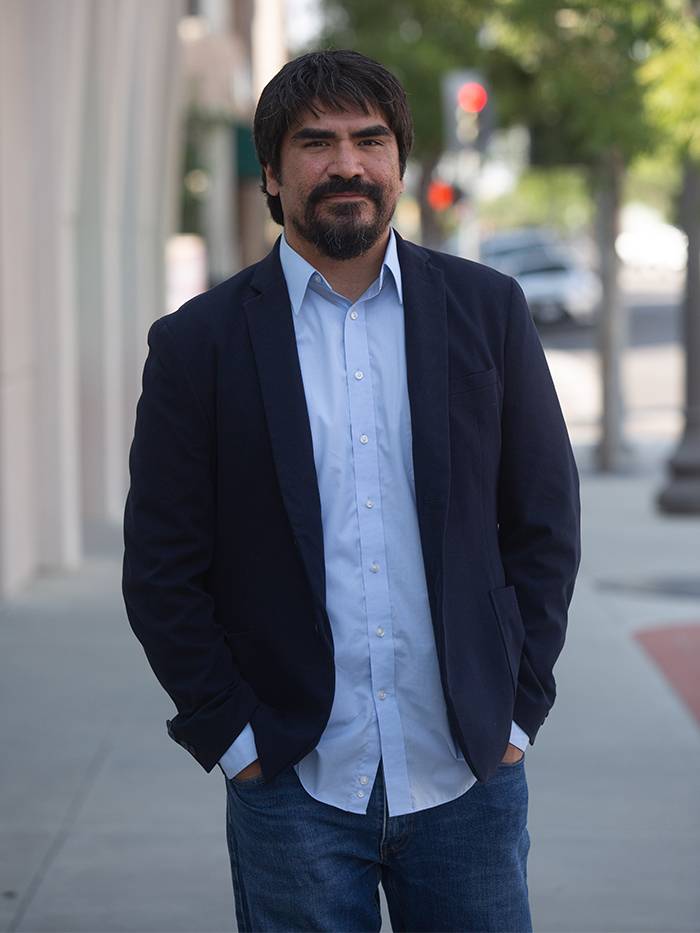
Dr. Oliver A. Rosales is a Professor of History and Ethnic Studies at Bakersfield College, where he previously served as Faculty Coordinator of the Social Justice Institute. His teaching and research focus on Chicano/a, California, United States, and World history. Dr. Rosales has held appointments as a Visiting Faculty member at Bard College and as a Visiting Fellow at Harvard University’s Hutchins Center for African and African American Studies. He is the author of Civil Rights in Bakersfield: Segregation and Multiracial Activism in the Central Valley (University of Texas Press, 2024), which received the Outstanding Book & Media Award from the Association of Ethnic Studies, the 2025 Ambassador Julian Nava Best Ethnic Studies Book award, and an Honorable Mention for the Norris Hundley Book Award from the Pacific Coast Branch of the American Historical Association. A former Board Chair for California Humanities (2022–2024), he is a recipient of the Whiting Foundation’s Public Engagement Fellowship and multiple grants from the National Endowment for the Humanities. Most recently, he served as a historical consultant for the national Parks Service to help reshape public history and a revised exhibit experience at the NPS site in Keen, California.
2024 Outstanding Book Award, National Association for Ethnic Studies
2025 Honorable Mention, Norris & Carol Hundley Award, Pacific Coast Branch of the American Historical Association
2025 The Ambassador Julian Nava Best Ethnic Studies Book, International Latino Book Awards
A multiracial history of civil rights coalitions beyond the farm worker movement in twentieth-century Bakersfield, California.
In Civil Rights in Bakersfield, Oliver Rosales uncovers the role of the multiracial west in shaping the course of US civil rights history. Focusing on Bakersfield, one of the few sizable cities within California’s Central Valley for much of the twentieth century in a region most commonly known as a bastion of political conservatism, oil, and industrial agriculture, Rosales documents how multiracial coalitions emerged to challenge histories of racial segregation and discrimination. He recounts how the region was home to both the historic farm worker movement, led by César Chávez, Dolores Huerta, and Larry Itliong, and also a robust multiracial civil rights movement beyond the fields. This multiracial push for civil rights reform included struggles for fair housing, school integration, public health, media representation, and greater political representation for Black and Brown communities. In expanding on this history of multiracial activism, Rosales further explores the challenges activists faced in community organizing and how the legacies of coalition building contribute to ongoing activist efforts in the Central Valley of today.