
Distress Migration Symposium
Dr. Sarah Blue | Texas State University Department of Geography and Environmental Studies
Thursday, February 26, 2026
10:00 am - 3:30 pm | Flowers Hall 230
Registration Closed

Dr. Sarah Blue | Texas State University Department of Geography and Environmental Studies
Thursday, February 26, 2026
10:00 am - 3:30 pm | Flowers Hall 230
Registration Closed
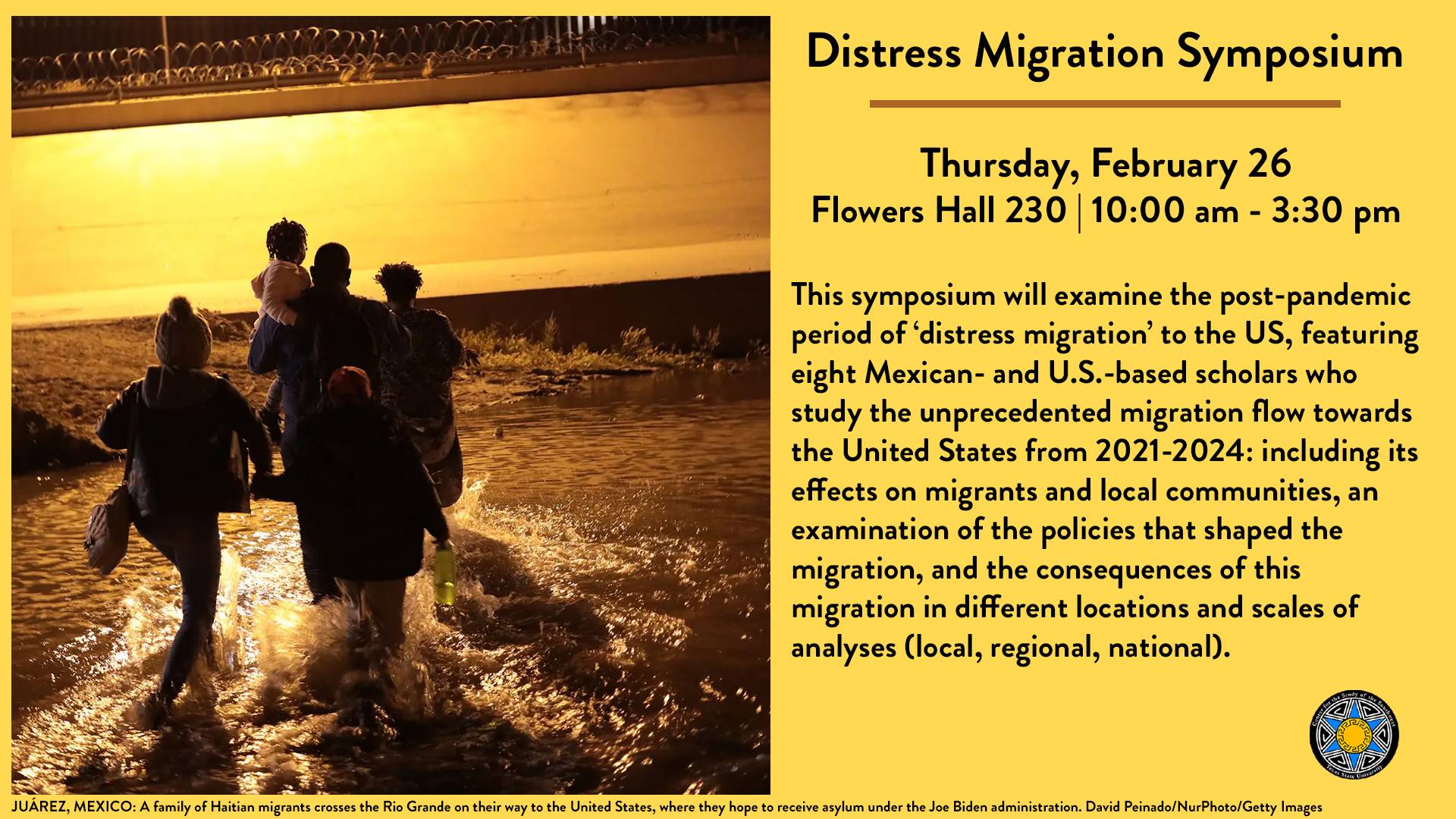
Symposium Description:
Jacqueline Bhabha (2018) introduced the term ‘distress migration’ to broaden the characterization of irregular migrants, including not only those forced from their homes (‘refugees’) and those who face an existential threat (‘survival migrants’) but also those who view mobility as the solution to chronic destitution or hopelessness. The unprecedented post-pandemic migration to the US-Mexico border (2021-2024) witnessed new strategies in response to this mass movement. While new state mechanisms to control or deter migrant mobility were introduced in destination and transit countries, migrants and those who facilitate and profit from their travel adapted in response. This symposium invites critical research and dialogue that examines the post-pandemic period of ‘distress migration’ to the US -- i.e., perspectives that reveal the restriction of movement and lawful pathways for migrants, forcing them into precarious conditions. Join a small community of migration scholars and activists from across the Americas to collectively deepen our understanding of strategies, consequences, and lessons learned during this post-pandemic period of ‘distressed migration’ with scholarship rooted in dignity and social justice.
Tentative Itinerary
10-10:30am: Welcome and Introduction
10:30-11:30am: 2021-2024 Distress Migration: Who, What, Why
11:30-12:30pm: Panel Discussion: Connections, lessons learned, and future directions
12:30-1:30pm: Lunch
1:30-2:30pm: 2021-2024 Distress Migration: Impact on Mexico
2:30-3:30pm: Panel Discussion: Connections, lessons learned, and future directions
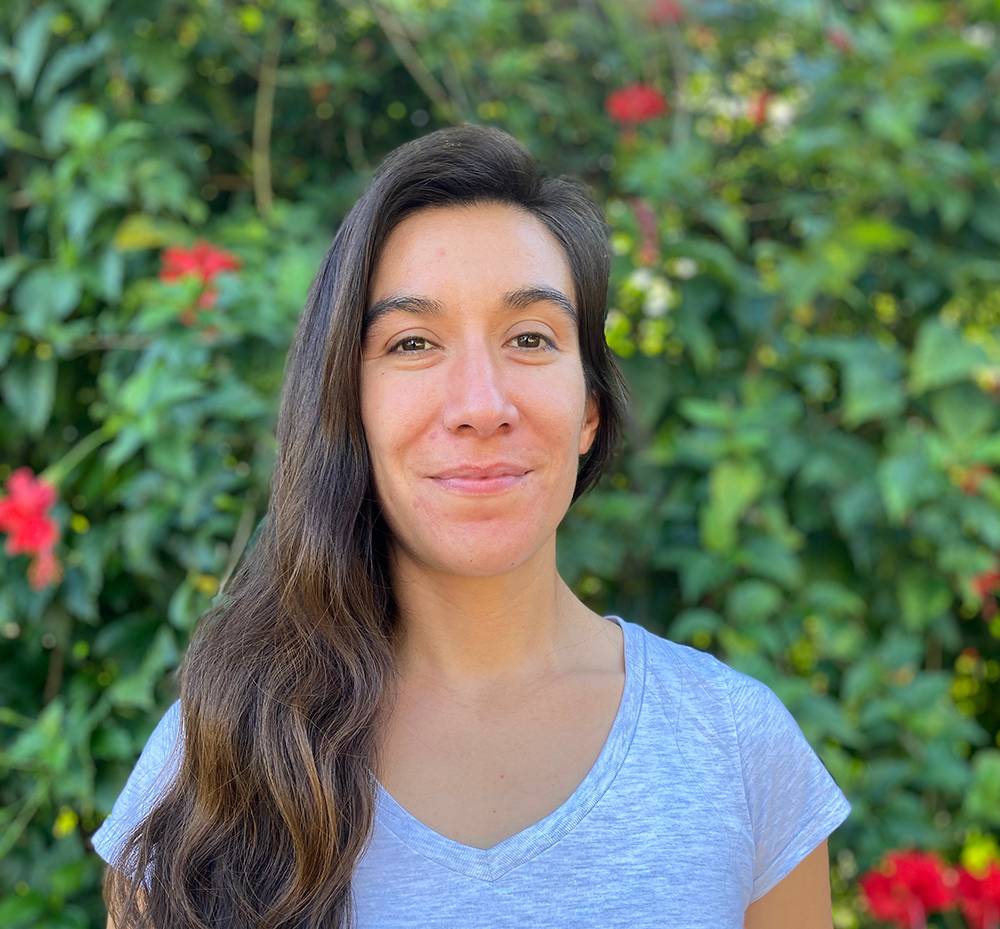
Alicia Barceinas Cruz is an Assistant Professor in the Department of Geography at the University of Kentucky. Her research combines approaches from political ecology, feminist political geography, and border studies to examine how geopolitical borders shape human and more-than-human lives. Her current work in Southern Mexico focuses on the expansion of commodity plantations to analyze the impacts that transnational politics and human migration policies have on agrarian livelihoods and land.
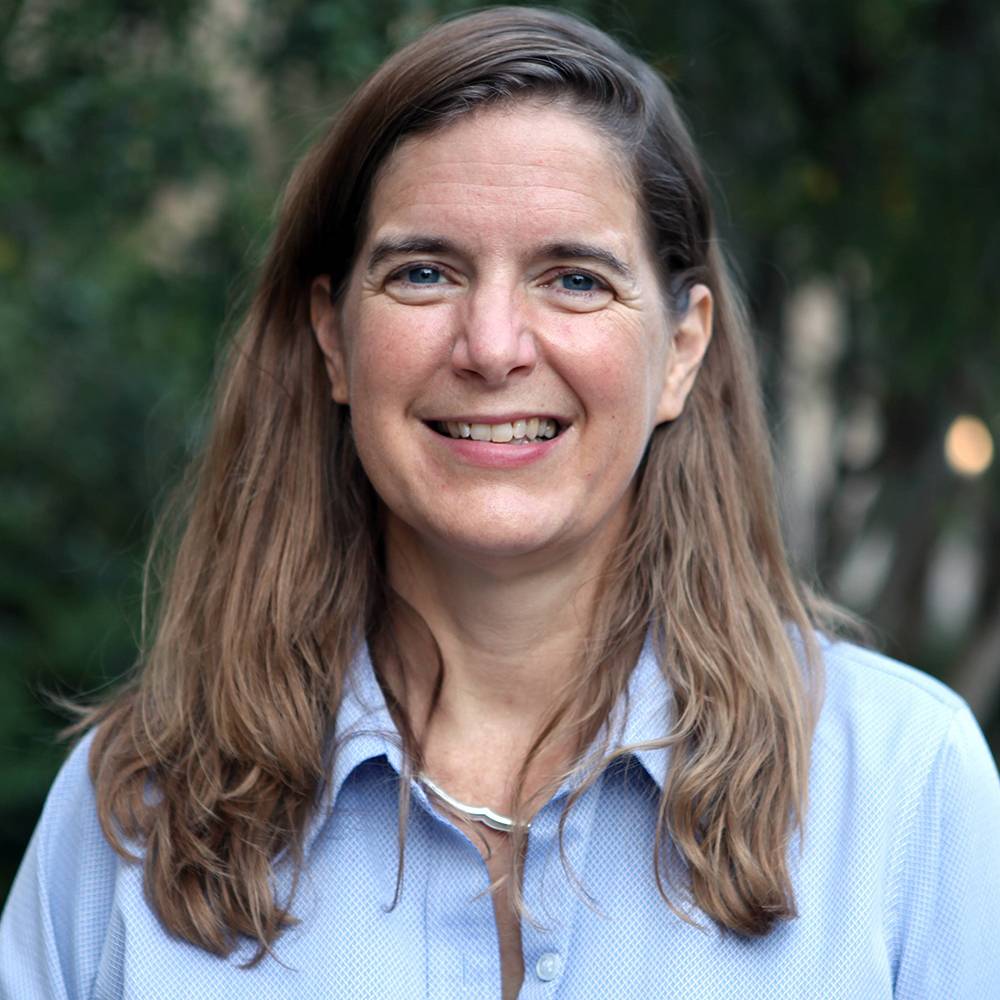
Sarah Blue is a Professor in the Department of Geography and Environmental Studies at Texas State University and the Jones Professor of Southwestern Studies. She received her B.A. in Geography from the University of Denver, M.A. in Geography at the University of Minnesota, and Ph.D. in Geography from UCLA. Her research has focused on the political economy of migration and development, immigration from Latin America to the United States, refugee and asylum issues, and socio-economic inequality for groups affected by migration in the United States, Central America, and Cuba. She has conducted qualitative research with undocumented US Latino immigrants since 2007 and has focused on the experiences of migrants/asylum seekers in the US since 2015. Dr. Blue’s recent work on irregular transit migration to the US-Mexico border and the impact of liminal legal status on Latino immigrants in the US has been supported by grants from the National Science Foundation and a Fulbright Fellowship. Her published work has appeared in journals such as Political Geography, Geopolitics, Geographical Review, Journal of Ethnic and Migration Studies, Journal of Latin American Geographers, and Population, Space, and Place.
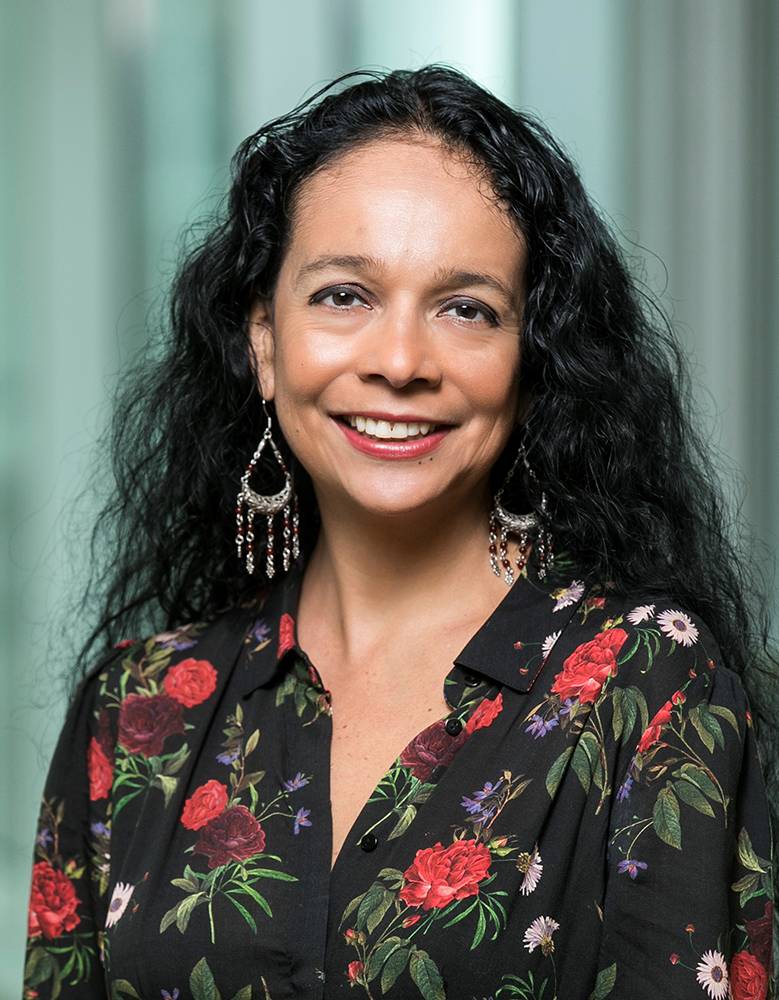
Guadalupe Correa-Cabrera is Professor in the Schar School of Policy and Government, and co-director of the Terrorism, Transnational Crime and Corruption Center (TraCCC) at George Mason University. Her areas of expertise are border studies, U.S.-Mexico relations, international security, migration studies, and illicit networks. She is author of Los Zetas Inc.: Criminal Corporations, Energy, and Civil War in Mexico (University of Texas Press, 2017; Spanish version: Planeta, 2018). Her newest co-authored book is entitled Frontera: A Journey across the U.S.-Mexico Border (Texas Christian University Press, 2024). Her forthcoming book in Spanish (2025) is titled: Carteles Inc: A “New Generation” of Criminal Networks (in contract with Siglo XXI Editores). Professor Correa-Cabrera is Past President of the Association for Borderlands Studies (ABS) and co-editor of the International Studies Perspectives journal. She currently conducts research on human smuggling and transnational crime networks, and is writing her upcoming book titled Coyotes LLC: The Industry of Human Smuggling and the American “Dream.” Professor Correa-Cabrera was a Fulbright U.S. Scholar in Mexico and Visiting Scholar at El Colegio de la Frontera Norte in Tijuana in 2014-2015. In the Fall of 2025 she was Distinguished Visiting Scholar at the Davidson Institute for Global Security of The John Sloan Dickey Center for International Understanding in Dartmouth College. She is a frequent commentator on Mexican politics, U.S.-Mexico relations, (im)migration, and border security for several media outlets.
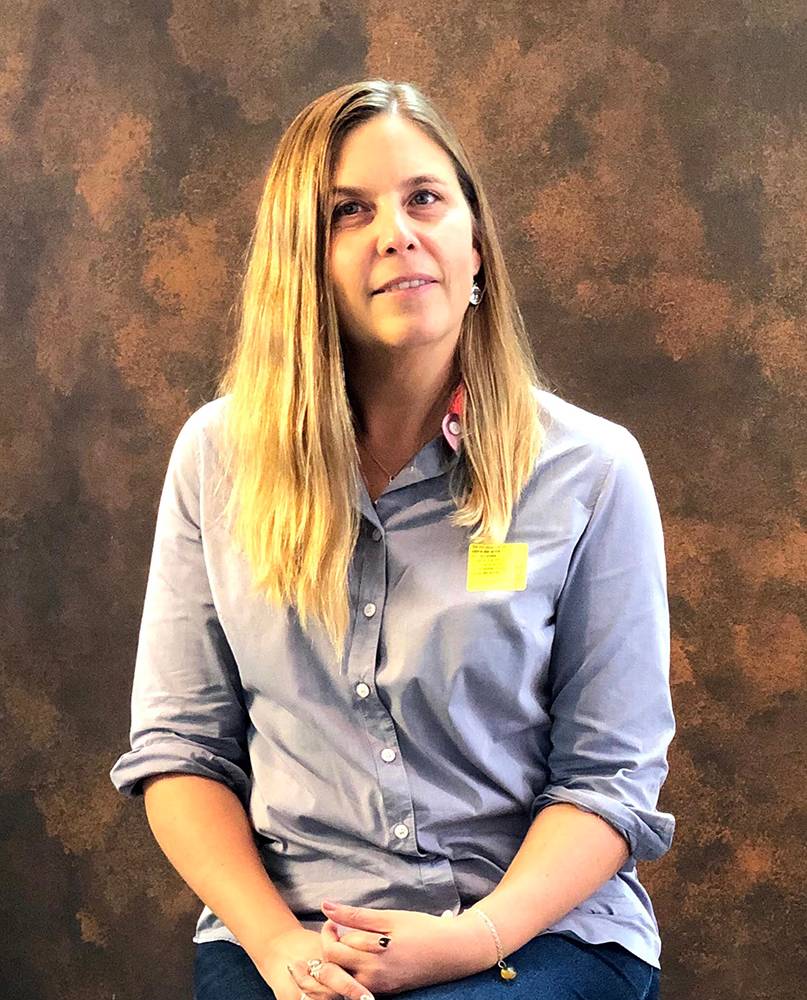
Dr. Lucinia Gandini is a Senior Researcher at the Institute for Legal Research (Instituto de Investigaciones Jurídicas), National Autonomous University of Mexico (UNAM), and Coordinator of the University Seminar on Internal Displacement, Migration, Exile, and Repatriation (SUDIMER), UNAM. She is a Level III member of Mexico’s National System of Researchers (Sistema Nacional de Investigadoras e Investigadores, SECIHTI). She is also a Non-Resident Global Fellow at the Migration Policy Institute (Washington, D.C.) and a Research Fellow at the Center for Latin American & Latino Studies, American University.
Dr. Gandini is a specialist in migration and refugee studies in Mexico and Latin America. Her research focuses on migration governance, socio-legal integration, forced mobility, human rights, and contemporary mobility dynamics, including the Venezuelan displacement and Central American caravans. In 2020, she co-founded the CAMINAR research group, which conducts rigorous comparative research on mobility, migration and asylum policies, and regularization processes across eight Latin American countries.
In 2021, she received the William M. LeoGrande Award from American University for the best academic book on Latin America, for the co-authored volume Caravans. In 2025, she was awarded the Lelio Mármora Prize by the Academic Network of the Quito Process for leading the CAMINAR research project on the regularization of Venezuelan migrants in Latin America, in recognition of its contribution to understanding and improving migration and asylum policies in the region.
Dr. Gandini has an extensive publication record in academic books and peer-reviewed journals. She also serves on several editorial boards, including International Migration Review and Frontiers in Human Dynamics.
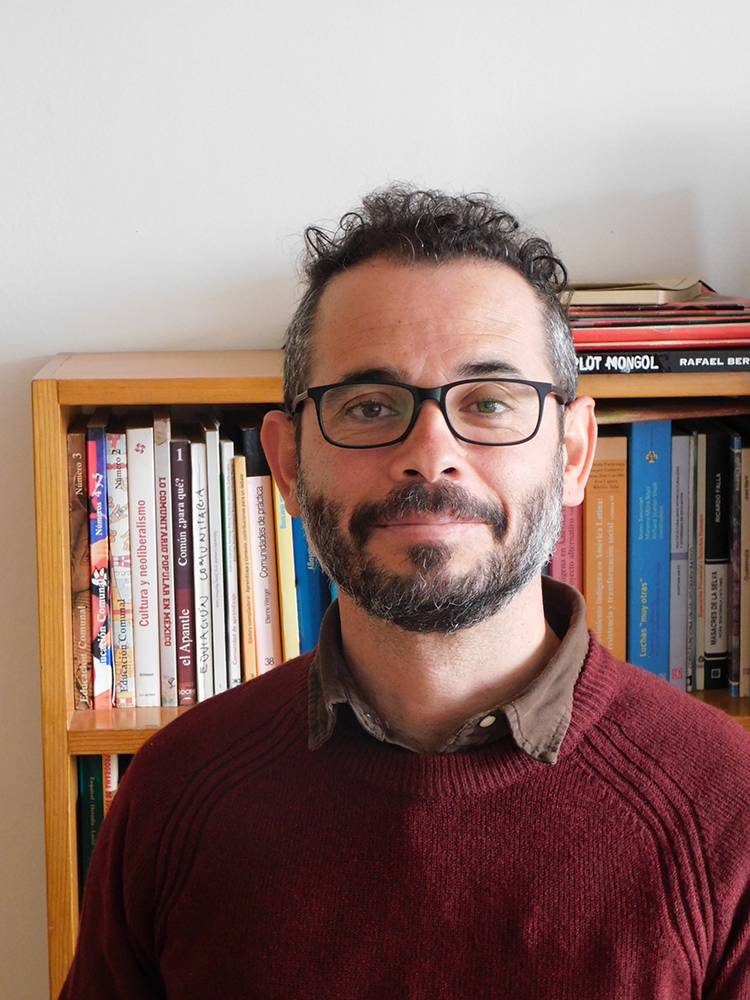
Bruno Miranda is a Research Assistant at UNAM Instituto de Investigaciones Sociales (Institute of Social Research) and co-editor of (Trans)fronteriza, a newsletter on Border Studies hosted by CLACSO. His recent research areas include the transformation of border cities into waiting spaces in Mexico for transcontinental (Asia and Africa) and Caribbean migrants. He is interested in the changes and rearrangements in migration systems caused by diverse, protracted and complex mobilities.
Among his latest publications are:
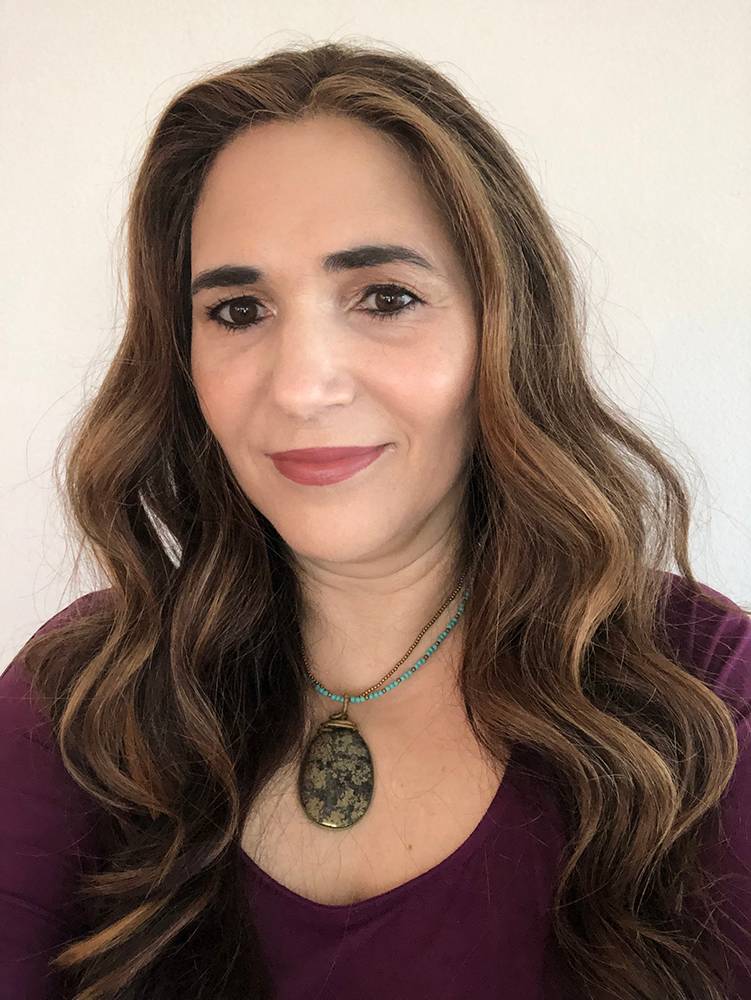
Rebecca Maria Torres is Professor in the Department of Geography & the Environment and C. B. Smith, Sr. Centennial Chair in United States-Mexico Relations #4 at the University of Texas at Austin. Her research examines migration, forced displacement, and asylum-seeking among Mexican children, youth, and families, with a focus on feminist political geography, neoliberal extractivism, violence, and transnational governance across Mexico and the U.S.-Mexico borderlands.
She is Principal Investigator of the NSF Geography & Spatial Sciences project “Geographies of Displacement: Mexican Migrant/Refugee Children and Youth in the Mexico-United States Borderlands” (Award #1951772, 2020–2025), co-led with Valentina Glockner-Fagetti and a binational research team. She also serves as Co-Principal Investigator (with Eugenio Arima, PI, and Kenneth Young, Co-PI) on the NSF Human-Environment & Geographical Sciences project “The Avocado Connection to Ecosystem Degradation, Violence, and Migration” (Award #2242268, 2023–2026), conducted in collaboration with the Universidad Nacional Autónoma de México (UNAM) Morelia and its Instituto de Investigaciones en Ecosistemas y Sustentabilidad (IIES).
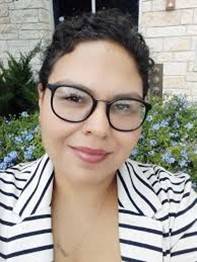
Montserrat Valdivia is a Mexican Posdoctoral Fellow at UT Austin. She got her PhD at the Teresa Lozano Long Institute of Latin American Studies (LLILAS) program at UT Austin. She holds a B.A. in Social Anthropology and an MA. in Asian and African Studies from the El Colegio de Mexico (COLMEX). Her research interests are the relationship between childhood and violence, migration, and refugee studies. For her PhD dissertation she worked on a transnational dissertation research project examining the experiences of Central American adolescents who have backgrounds as gang members as they leave their home countries and traverse the increasingly arcane asylum process through Mexico. She was particularly interested in knowing how those adolescents were perceived by the law and institutions in Mexico and their possibilities of being recognized as refugees. After her PhD graduation, she worked for four years as National Head of the Migration and Internal Displacement Program of the International Committee of the Red Cross in Mexico.
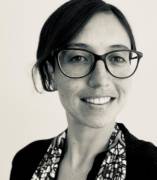
Soledad Álvarez Velasco is a social anthropologist and human geographer whose research analyses the interrelationship between mobility, control and spatial transformations across the Americas. She investigates the intersection between undocumented global south-north and global south-south transit migration, border regimes, the formation of migratory corridors across the Americas and the migrant struggle across these transnational spaces. She combines a multi-scale and historical analysis with multi-sited ethnography and a digital ethnography based on a migrant-centred perspective to reconstruct migrants’ spatial and temporal trajectories. In her research, she foregrounds the Andean Region as a key space for understating the dynamics at stake in the transits of Latin American, Caribbean, African and Asian migrants to reach the U.S., or other southern cone and Caribbean destinations. Her work also analyzes the impact of the externalization of the U.S. border regime across the migratory corridors of the Americas, the movement of unaccompanied and undocumented migrant children, as well as the dynamics of transnational migrant smuggling networks operating across those transnational spaces.