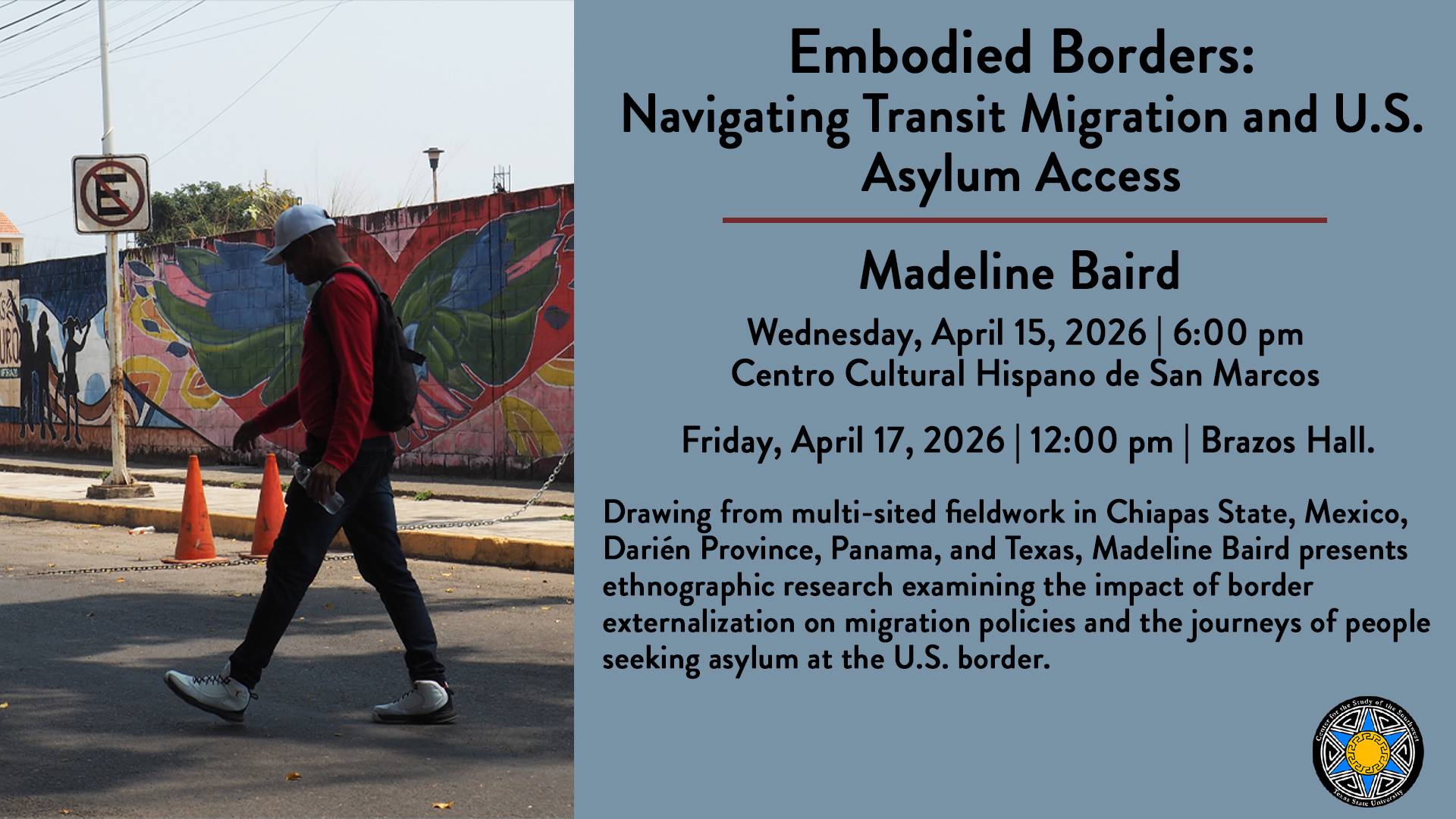
A post-pandemic flow of migrant people from countries, like Venezuela, Cuba, Haiti, and outside of the Americas, for the first time, constituted more than half of migrant arrivals at the U.S. southern border in 2024. In response, the U.S. government has fortified mechanisms to limit access to asylum and externalize border enforcement to deter migrant arrivals into Mexico, and more recently across Latin America. Drawing from multi-sited fieldwork in Chiapas State, Mexico, Darién Province, Panama, and Texas, Baird presents ethnographic research examining the impact of border externalization on migration policies and the journeys of people seeking asylum at the U.S. border. Through Photovoice and visual ethnographic methods with people crossing Mexico and Panama, Baird presents the lived experiences and embodied consequences of these regimes of exclusion across some of the most significant borders implementing U.S.-influenced migration policies. Ultimately, her collaborative ethnography humanizes the journeys of people seeking protection at the U.S. southern border and elucidates how the implementation of U.S. border externalization deeper into Latin America governs new sites of exclusion and ideologies of migrant care, protection, and human rights.
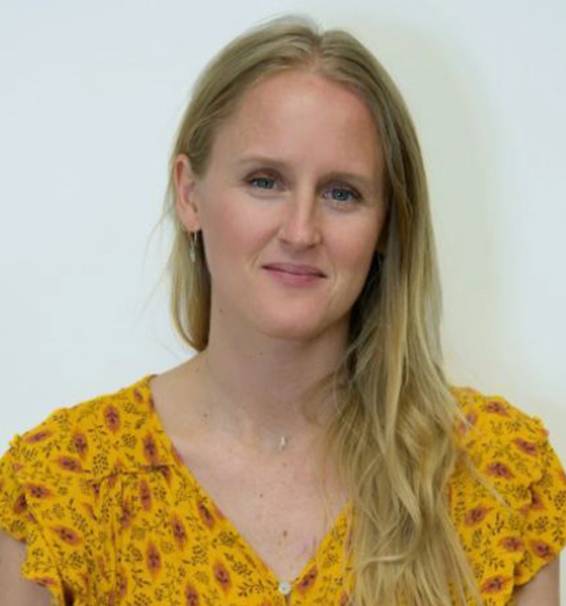
Madeline Baird is a border scholar and medical anthropologist. She is currently a Ph.D. candidate in the Department of Anthropology at the University of Connecticut. Her doctoral research builds off a decade of engaged community research and public health work in the U.S. and Latin America. Her current research employs multi-sited ethnography to examine how the shifting externalization and internalization of U.S. border policies shape public health and migrant protection in Darién Province, Panama, Chiapas State, Mexico, and Texas. Her work has been supported by the Mexico Fulbright Program, Berkeley Interdisciplinary Migration Initiative, and Dodd Center for Human Rights and published in Migration Policy Practice, the Journal of Latin American and Caribbean Anthropology, and Social Science & Medicine. She is currently developing a collaborative photobook, En las Manos de Dios (In the Hands of God), that showcases visual representations of embodied experiences of the border and transforming tactics of deterrence used to dissuade access to asylum. Most recently, she serves as a research fellow at the University of Texas Community Health Research and Implementation Science Lab and community health worker in Central Texas.